


 Inquiries by Email
 WhatsApp Reservation

Stem cell therapy in Japan uses your own adipose-derived mesenchymal stem cells, cultured for 5-7 weeks under government oversight, to treat chronic conditions — when conventional medication or surgery is no longer enough.
Below: how it works, what randomized trials show across diabetes, knees, heart and brain, who benefits most, and why Japan’s MHLW-certified framework changes the equation.
At Cell Grand Clinic in Osaka, the protocol uses your own fat tissue cultured for 7 weeks — never donor cells — delivering up to 200 million autologous stem cells per session.
MHLW Type 2 certified. NIH-trained physician. 3,000+ cases treated. No hospitalization required.

- 1. What Is Stem Cell Therapy?
- 2. Why Japan? The Regulatory Framework
- 3. What Conditions Can Be Treated?
- 4. The Treatment Process — From Consultation to Recovery
- 5. How Much Does It Cost?
- 6. Is It Safe? Risks and Side Effects
- 7. Japan vs. Other Countries
- 8. How to Choose a Clinic in Japan
- 9. About Cell Grand Clinic — An ABRM-Certified Regenerative Medicine Practice in Osaka
- 10. Frequently Asked Questions
- References
1. What Is Stem Cell Therapy?
Stem cell therapy is a form of regenerative medicine that uses the body’s own repair cells to reduce inflammation, promote tissue healing, and restore function in damaged organs. Rather than masking symptoms with medication, it aims to address the underlying biological cause of disease.
How Mesenchymal Stem Cells (MSCs) Work
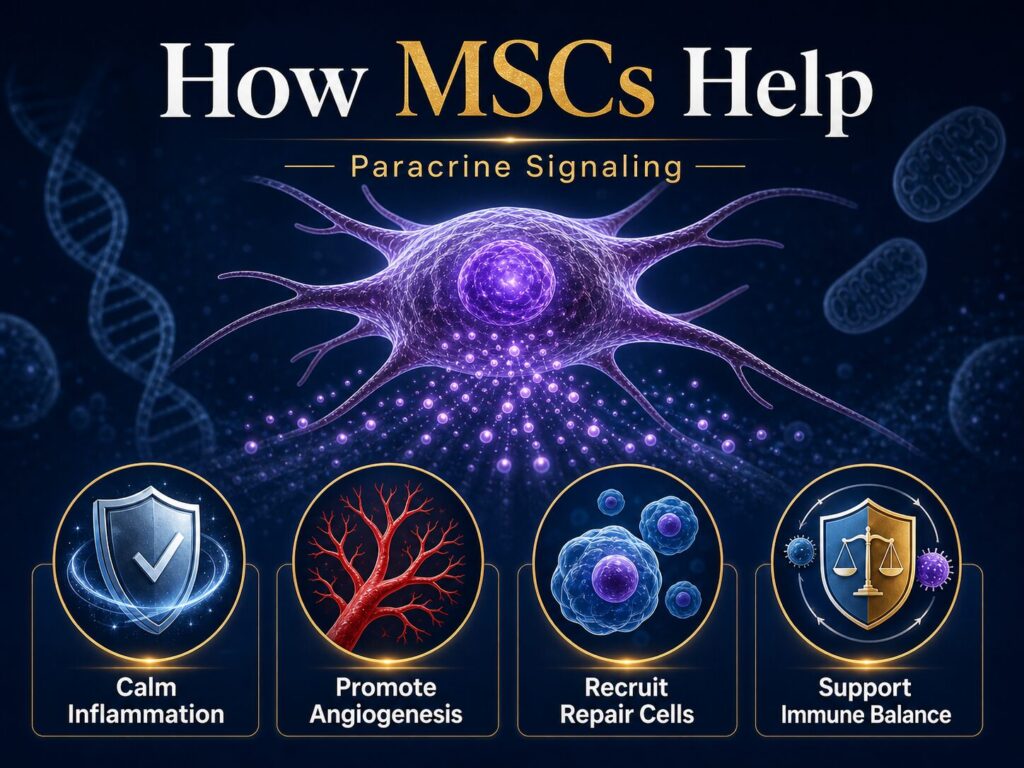
The most widely used cell type in clinical practice is the mesenchymal stem cell, or MSC. These cells are found naturally in fat tissue, bone marrow, and other sources throughout the body. When harvested, multiplied in a laboratory, and reintroduced into the patient, MSCs exert their effects primarily through a mechanism called the paracrine effect — they release hundreds of bioactive molecules (growth factors, cytokines, and extracellular vesicles) that:
- Suppress excessive inflammation
- Stimulate the growth of new blood vessels (angiogenesis)
- Recruit the body’s own repair cells to the site of damage
- Modulate the immune system to prevent it from attacking healthy tissue
It is important to understand that MSCs do not simply “turn into” new cartilage, new neurons, or new heart muscle. Their primary role is to create a healing environment that allows the body’s own tissues to recover. This distinction matters — and it is backed by decades of research.
Autologous vs. Allogeneic — Why the Source of Cells Matters
Autologous stem cells are harvested from the patient’s own body — typically from a small sample of abdominal fat tissue. Because these cells carry your own DNA, there is essentially zero risk of immune rejection. This is the standard approach in Japan’s MHLW-regulated clinics.
Allogeneic stem cells come from a donor — often umbilical cord tissue. While these cells are available “off the shelf” and do not require a harvesting procedure, they carry a theoretical risk of immune response. In Japan, allogeneic therapies face stricter regulatory requirements and are generally limited to clinical trials.
Adipose (fat) tissue is the preferred source for autologous MSCs in Japan because it yields a significantly higher concentration of stem cells compared to bone marrow — and the harvesting procedure is far less invasive (a small sample from the abdomen under local anesthesia, rather than a bone marrow aspiration).
2. Why Japan? The Regulatory Framework
Japan is one of the few countries in the world where stem cell therapy is both legal and regulated by the national government. Under the Act on the Safety of Regenerative Medicine (ASRM), clinics must submit detailed treatment plans to the Ministry of Health, Labour and Welfare (MHLW) and operate under strict oversight — a level of transparency that most other countries simply do not offer.
Stem cell therapy exists in a legal grey area in most countries. In the United States, the FDA restricts cultured (expanded) stem cell therapies to clinical trials. In Mexico, Thailand, and parts of Central America, treatments are widely available but often operate without government oversight.
Japan occupies a unique position: it is one of the only countries where cultured autologous stem cell therapy is both legal and strictly regulated under national law.
The Act on the Safety of Regenerative Medicine (ASRM)
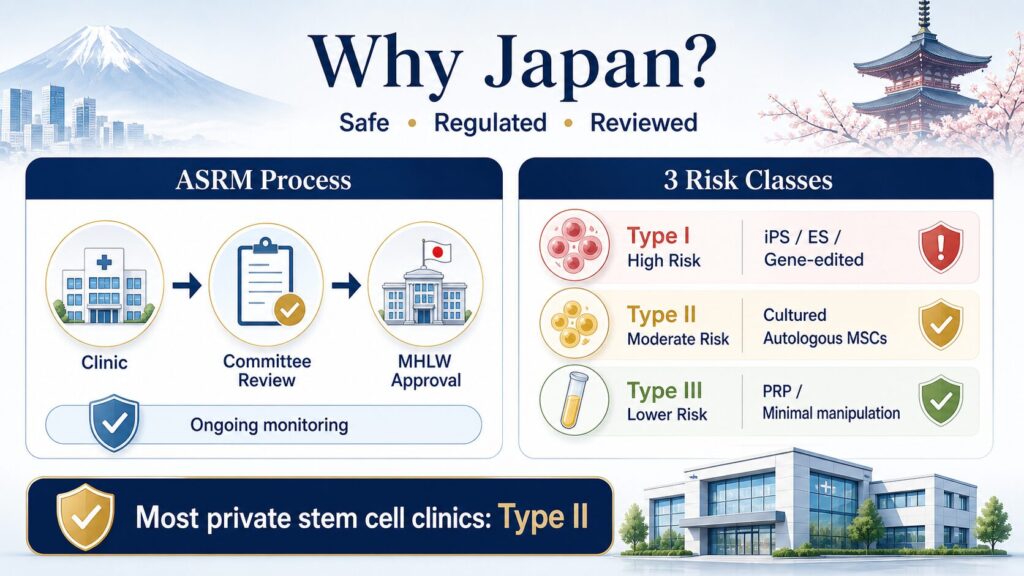
Enacted in 2014, the ASRM requires every clinic that provides regenerative medicine to submit a detailed treatment plan — called a Regenerative Medicine Provision Plan — to the MHLW. This plan must be reviewed and approved by an independent, government-certified Special Committee before any patient can be treated.
The law classifies regenerative medicine into three risk tiers:
| Risk Class | Cell Type | Oversight Level | Examples |
|---|---|---|---|
| Class I (Highest) | iPS cells, ES cells, gene-modified cells | Reviewed by national-level committee appointed by MHLW | iPS cell-based therapies (research only) |
| Class II (Moderate) | Cultured autologous stem cells (MSCs) | Reviewed by MHLW-Certified Special Committee | Adipose-derived MSC therapy for joints, diabetes, anti-aging |
| Class III (Lower) | Minimally manipulated cells (e.g., PRP) | Reviewed by MHLW-Certified Committee | Platelet-rich plasma injections |
Most stem cell treatments offered at private clinics in Japan — including adipose-derived MSC therapy — fall under Class II. This means they have been reviewed by an independent committee, the treatment protocol has been filed with the government, and the clinic is subject to ongoing monitoring and inspection.
Cell Processing Centers (CPCs)
Under Japanese law, stem cells cannot simply be processed in a back room. They must be cultured in a government-licensed Cell Processing Center (CPC) that meets strict standards for sterility, contamination control, and quality assurance. In addition, in-hospital CPCs generally operate under a notification system (filing only), whereas outsourced, external CPCs must obtain formal accreditation as well—meaning they are run under even more stringent operational standards and oversight. Each batch of cells undergoes testing for bacteria, mycoplasma, endotoxins, and viability before it is cleared for administration.
This infrastructure is one of the key differences between Japan and countries where stem cell therapy operates outside a formal regulatory framework.
3. What Conditions Can Be Treated?
Stem cell therapy in Japan is used for conditions driven by chronic inflammation and tissue damage — most notably knee osteoarthritis, type 2 diabetes, heart failure, stroke recovery, mild Alzheimer’s disease, erectile dysfunction, and age-related frailty. The strongest Level I evidence (multiple meta-analyses of randomized trials) currently supports knee osteoarthritis and diabetes.
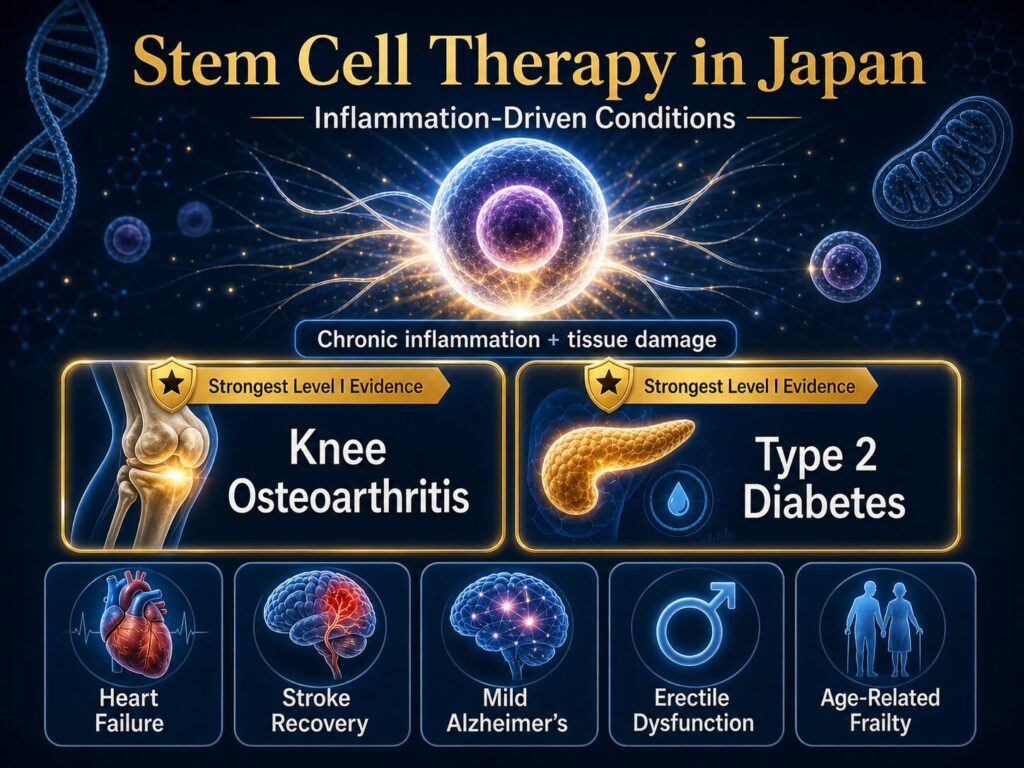
Stem cell therapy is not a drug designed to target a single disease. It is a biological mechanism. MSCs reduce inflammation, modulate the immune system, and promote tissue repair — processes that are relevant to virtually every chronic disease in the body. Arthritis, diabetes, heart failure, and neurodegenerative diseases all share a common thread: chronic inflammation and progressive tissue damage.
Think of it this way: a fire extinguisher does not “treat” kitchen fires, electrical fires, and forest fires as three separate diseases. It addresses the underlying problem — fire. Similarly, MSCs address the underlying biology — inflammation and cellular damage — which is why the same cell type can show benefit across seemingly unrelated conditions.
Orthopedic — Knee Osteoarthritis & Chronic Pain
Knee osteoarthritis is the most widely studied application of MSC therapy. A 2025 meta-analysis published in Stem Cell Research & Therapy analyzed 8 randomized controlled trials involving 502 patients and found that MSC injection into the knee joint produced significant improvements in pain and function (WOMAC score) at both 6 and 12 months. Higher cell doses and adipose-derived cells showed the strongest results, with no increase in adverse events compared to controls.
For patients who have tried hyaluronic acid injections, physical therapy, and oral medications without lasting relief — and who want to avoid or delay knee replacement surgery — stem cell therapy offers a non-surgical alternative supported by Level I evidence.
Knee Osteoarthritis: A Non-Surgical Path with Stem Cells Read Article Torn Meniscus Without Surgery: A Stem Cell Treatment Option Read Article Alternatives to Knee Replacement: PRP, HA, MSC & Exosome Compared Compare OptionsMetabolic — Diabetes (Type 1 & Type 2)
A 2025 meta-analysis in Stem Cell Research & Therapy, covering 34 randomized controlled trials, reported that MSC therapy was significantly more effective than placebo for diabetes management (odds ratio 2.79, 95% CI 1.63–4.75). Autologous MSCs outperformed allogeneic sources, and effects were more pronounced in Type 2 diabetes than Type 1. A separate review in the Journal of Clinical Endocrinology and Metabolism summarized the molecular mechanisms underlying these effects: adipose-derived MSCs facilitate endogenous beta-cell regeneration, preserve residual beta-cell mass, regulate immune function, and improve insulin sensitivity through paracrine signaling — together supporting clinical observations of improved glycemic control and reduced insulin requirements in Type 2 diabetes.
Stem Cell Therapy for Diabetes: A Regenerative Approach to Glycemic Control Learn MoreNeurological — Stroke Recovery
A broader meta-analysis of stem cell therapies for stroke, published in Neurological Sciences (2024), confirmed an overall favorable safety profile, though it noted significant variability in effectiveness between trials — underscoring the importance of standardized protocols and adequate cell doses
Improving Atherosclerosis: Stem Cell Therapy for Vascular & Cardiac Health Learn MoreNeurological — Alzheimer’s Disease
In one of the most significant developments in recent years, a 2025 randomized controlled trial published in Nature Medicine tested allogeneic MSC therapy (laromestrocel) in 49 patients with mild Alzheimer’s disease across 10 U.S. centers. The results showed a 48.4% slowing of whole-brain volume loss (P=0.005) and a 61.9% slowing of left hippocampal volume decline (P=0.021) compared to placebo over 39 weeks. While this is still Phase 2a, it represents the first RCT evidence that MSC therapy may slow structural brain degeneration in Alzheimer’s
Cardiovascular — Heart Failure
A 2024 meta-analysis in the Journal of Translational Medicine, analyzing 17 randomized controlled trials with 1,684 patients, found that MSC transplantation reduced mortality risk by 22% (relative risk 0.78, P=0.04) and significantly improved left ventricular ejection fraction (LVEF +3.38%, P<0.001). Subgroup analyses suggested that autologous MSCs and intracoronary delivery were each associated with better outcomes in some indices, while optimal cell dosing in heart failure remains under investigation.
Improving Atherosclerosis: Stem Cell Therapy for Vascular & Cardiac Health Learn MoreAnti-Aging & Longevity
Age-related frailty is driven by the progressive decline of the body’s regenerative capacity — including reduced stem cell populations, increased systemic inflammation (“inflammaging”), and accumulated cellular damage. MSC therapy aims to partially reverse this process by replenishing anti-inflammatory and pro-regenerative signaling.
A 2021 review in Theranostics outlined the mechanisms by which MSCs address frailty: reducing chronic inflammation, improving immune function, promoting vascular repair, and enhancing tissue regeneration. Clinical trials on aging frailty have shown improvements in physical performance, inflammatory markers, and quality of life.
Reverse Aging: How Stem Cell IV Therapy Actually Works Learn How Skin Rejuvenation Beyond Fillers: Rebuild Collagen From Within Learn MoreErectile Dysfunction (ED)
For men whose ED does not respond adequately to PDE5 inhibitors (such as Viagra or Cialis) — particularly those with diabetes-related vascular damage — stem cell therapy targets the root cause: damaged penile blood vessels and smooth muscle tissue. A 2025 review in Frontiers in Medicine summarized preclinical and emerging clinical evidence showing that MSCs promote angiogenesis, nerve regeneration, and smooth muscle repair in the corpus cavernosum.
Drug-Free ED Treatment: Stem Cells Without Pills or Implants Learn MoreOther Conditions Under Investigation
MSC therapy is also being studied for multiple sclerosis, liver cirrhosis, chronic kidney disease, intervertebral disc degeneration, and autoimmune conditions such as rheumatoid arthritis. Evidence levels vary — some conditions have multiple RCTs, while others remain at the pilot-study stage. Patients should ask their physician about the specific evidence available for their condition.
Chronic Pain Without Opioids: Treating the Cause, Not the Symptom Read ArticleReach us directly — WhatsApp and email inquiries are free of charge.
4. The Treatment Process — From Consultation to Recovery
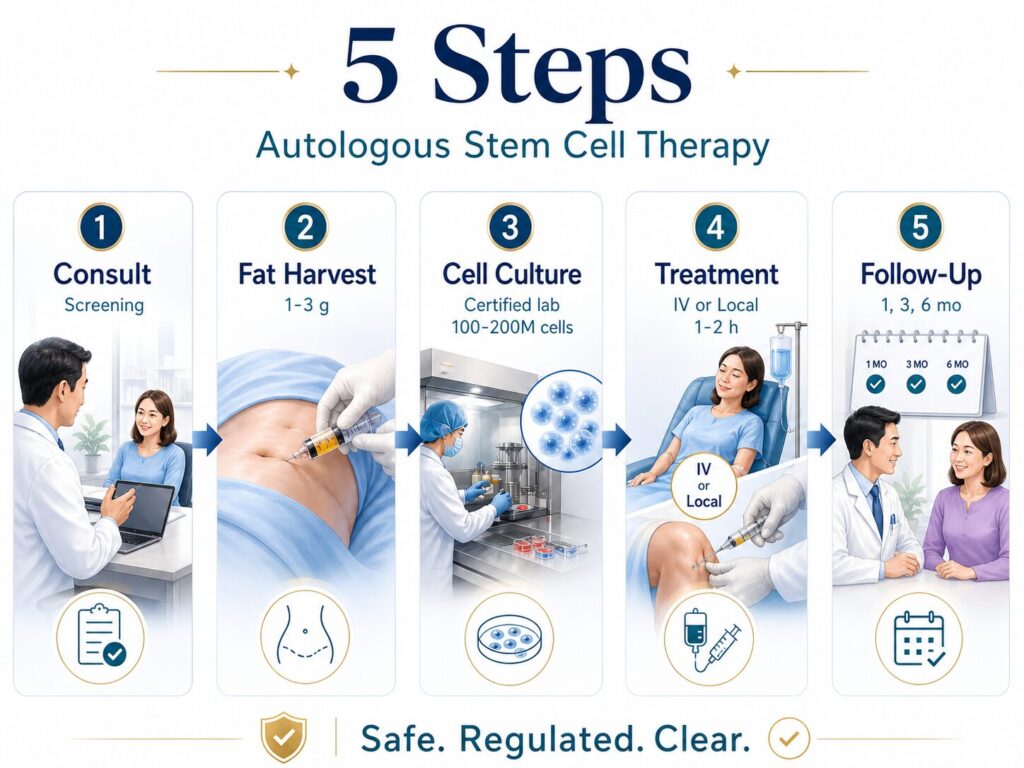
Stem cell therapy in Japan typically requires two short visits separated by a 5-7weeks cell cultivation period. Visit 1 is fat tissue harvesting under local anesthesia (1–2 days). Visit 2 is administration by IV infusion or targeted joint injection (1–2 days). Total time on the ground in Japan is roughly 3 days across two trips.
Step 1 — Medical Consultation & Screening
Before any treatment begins, a physician conducts a thorough evaluation including medical history review, blood tests, and imaging as needed. This step determines whether stem cell therapy is appropriate for your condition — and it is also where a responsible clinic may advise against treatment if the evidence does not support it for your specific case.
Step 2 — Fat Tissue Harvesting (First Visit: 1–2 Days)
A small sample of fat tissue (approximately 1–3 grams) is collected from the abdomen under local anesthesia. The procedure takes about 20–30 minutes and is performed on an outpatient basis — you can walk out of the clinic afterward. Blood samples are also drawn for infection screening (HIV, hepatitis B/C, syphilis, HTLV-1).
Step 3 — Cell Cultivation in a Certified CPC (5-7 Weeks)
This is the stage that separates Japan’s approach from “same-day” procedures offered in some countries. Your stem cells are transported to a government-licensed Cell Processing Center, where they are cultured for approximately 5-7 weeks. During this time:
- The cells are expanded from a small number to typically 100–200 million or more
- Quality testing is performed at multiple checkpoints (sterility, viability, mycoplasma, endotoxins)
- Only cells that meet strict release criteria are cleared for administration
The 5-7 week cultivation period is not arbitrary — it allows time for the cells to be carefully selected, multiplied, and rigorously tested. “Same-day” procedures, by contrast, typically deliver far fewer cells (often under 10 million) with minimal quality testing.
During this period, you return home and await notification that your cells are ready.
Step 4 — Administration (Second Visit: 1–2 Days)
Depending on the condition being treated, cells are delivered by intravenous (IV) infusion for systemic conditions (diabetes, anti-aging, stroke, heart failure) or by local injection for targeted conditions (knee, joints, ED). The procedure itself is typically completed within 1–2 hours on an outpatient basis.
Step 5 — Follow-Up
Most clinics schedule follow-up assessments at 1, 3, and 6 months post-treatment. Results are not immediate — the biological repair process builds gradually, with most patients noticing meaningful changes between 1 and 6 months after treatment.
Note: Procedures may differ depending on the clinic. Please confirm the details with your attending clinic.
5. How Much Does It Cost?
Stem cell therapy in Japan generally costs USD 15,000–25,000 for a single-joint treatment, USD 20,000–40,000 for a systemic IV session (diabetes, anti-aging, neurological), and USD 25,000–50,000+ for comprehensive multi-session packages. Prices reflect MHLW-regulated cell processing, 5-7 weeks culture, and 100–200+ million cells per session — a service profile lower-regulation countries cannot reproduce.
Why Prices Vary — The Wagyu Analogy
Pricing for stem cell therapy is a bit like ordering steak: you can get a basic cut at a chain restaurant, or you can get A5 Wagyu from Kobe. Both are “steak,” but the quality, sourcing, preparation, and experience are vastly different.
In stem cell therapy, the factors that drive cost include:
- Cell count: A treatment delivering 50 million cells is not comparable to one delivering 200 million cells. Higher counts require longer cultivation and more laboratory resources.
- Culture duration: “Same-day” procedures (no culture) are cheaper but deliver far fewer cells. A 7-week culture with multiple quality checkpoints costs more — but produces a fundamentally different product.
- Quality testing: Sterility testing, viability assays, mycoplasma screening, and endotoxin testing add cost but are essential for safety.
- Regulatory compliance: Operating under MHLW regulation — with CPC certification, committee review, and government reporting — carries overhead that unregulated clinics do not have.
- Physician expertise: Board-certified regenerative medicine specialists with research backgrounds command different fees than general practitioners.
General Price Ranges in Japan
The following are approximate ranges for stem cell therapy in Japan. Actual costs vary by clinic, cell count, condition, and treatment protocol.
| Treatment Type | Approximate Range (USD) | Notes |
|---|---|---|
| Localized (single joint) | $15,000 – $25,000 | Knee, shoulder, or hip injection |
| Systemic IV (single session) | $20,000 – $40,000 | Diabetes, anti-aging, neurological conditions |
| Comprehensive package | $25,000 – $50,000+ | Multi-session protocols for complex conditions |
| Exosome / supernatant therapy | $1,000 – $10,000 | Cell-free alternative; lower cost, shorter process |
These prices reflect Japan’s premium regulatory environment. They include physician consultation, cell harvesting, CPC cultivation, quality testing, and administration. International patients should also factor in travel, accommodation, and any translation services.
What’s Included (and What Isn’t)
When comparing prices between clinics — or between countries — always ask what is included in the quoted price. Some clinics bundle everything (consultation, harvesting, culture, administration, follow-up) into a single package, while others charge separately for each component. Key questions to ask:
- Does the price include cell cultivation and quality testing?
- How many cells will be administered?
- Are follow-up consultations included?
- Is there an additional fee for the harvesting procedure?
- What happens if the cells fail quality testing — is there a re-culture at no extra charge?
The ranges above reflect what most international patients pay at MHLW-regulated clinics in Japan. Where your case actually falls depends on a few practical factors — the condition being treated, whether one or both knees are involved, the cell count needed per session, and whether intravenous and joint delivery are combined. We’re happy to estimate this for you before you commit to anything.
At Cell Grand Clinic in Osaka, the lead physician (NIH-trained, >3,000 regenerative cases) reviews each enquiry personally and replies in English with a written estimate, expected number of sessions, and the realistic two-trip schedule.
English correspondence. No fees, no obligation. Typical reply within 1 business day (Japan time).
6. Is It Safe? Risks and Side Effects
A 15-year meta-analysis of MSC clinical trials (62 RCTs, approximately 3,500 patients) found no increase in serious adverse events compared with controls. The most common side effects are mild and transient — low-grade fever, soreness at the harvesting site, and temporary fatigue — typically resolving within days. Serious adverse events occur in under 1% of cases in regulated settings.
Common Side Effects vs. Serious Adverse Events
| Category | Examples | Frequency |
|---|---|---|
| Common (mild) | Low-grade fever, soreness at harvesting / injection site, fatigue, mild swelling | Transient and self-limiting; meta-analysis shows MSC-associated fever (OR 3.65 vs control), site reactions, fatigue, and constipation are statistically more common but resolve within days |
| Uncommon | Headache, transient joint stiffness, sleeplessness | Reported in a minority of patients |
| Serious | Infection, allergic reaction, blood clot | < 1% in regulated settings; no excess serious adverse events vs control in the 15-year MSC safety meta-analysis |
How Japan’s Regulation Minimizes Risk
The MHLW regulatory framework directly addresses the major safety risks:
- Contamination risk → Mandatory CPC certification with sterility testing at multiple checkpoints
- Unqualified providers → Treatment plans must be reviewed by an independent certified committee
- Lack of follow-up → Clinics must report outcomes and adverse events to the government
- Unknown cell quality → Viability, potency, and contamination testing are required before release
This does not make stem cell therapy risk-free. No medical treatment is. But Japan’s regulatory structure provides a level of safety assurance that is not available in most countries where stem cell therapy is offered.
7. Japan vs. Other Countries
Japan and South Korea are the only countries with dedicated national laws governing regenerative medicine at private clinics. Japan requires cultured autologous (your own) cells, government-certified Cell Processing Centers, and mandatory cell-quality testing. Mexico, Thailand, and parts of Central America offer lower prices but operate without equivalent oversight; the United States restricts cultured stem cell therapies to clinical trials.
Patients considering stem cell therapy often compare options across multiple countries. The table below summarizes key differences in regulatory environment, cell processing, and typical costs.
| Factor | Japan | South Korea | Mexico | Thailand | United States |
|---|---|---|---|---|---|
| Government regulation | MHLW / ASRM (specific law) | MFDS (specific law) | COFEPRIS (limited oversight) | Thai FDA (evolving) | FDA (cultured cells restricted to trials) |
| Cultured cells legal? | Yes (Class II) | Yes (approved products) | Grey area | Grey area | No (clinical trials only) |
| Cell source | Autologous (adipose/BM) | Auto + Allo | Varies widely | Varies widely | Research only |
| CPC required? | Yes (government-certified) | Yes (KGMP) | Not required | Varies | FDA cGMP (research) |
| Typical cost range | $15K – $50K | $12K – $30K | $5K – $20K | $8K – $25K | $20K+ (trials only) |
| Cell count (typical) | 100M – 200M+ | 50M – 200M | Varies; often < 50M | Varies | Varies by trial |
| Quality testing mandatory? | Yes | Yes | No | Varies | Yes (trial protocol) |
Lower cost does not necessarily mean lower quality — but it often means less regulatory oversight, fewer quality checkpoints, and less transparency about what you are actually receiving.
Within Japan, clinics still differ in cell source, culture period, and whether they use the patient’s own cells at all. Three things are worth confirming with any clinic you contact — and they happen to be the points Cell Grand Clinic was built around.
A small adipose sample — about the volume of a sugar cube — under local anesthesia. No bone marrow, no donor.
Cell expansion in an MHLW-licensed Cell Processing Center to reach 100–200 million viable cells per session.
Strictly autologous. No allogeneic umbilical-cord product, which is the model used in many lower-cost overseas clinics.
Whether Cell Grand Clinic is the right fit for your specific condition is a separate question — and one worth a short conversation before you book any travel.
8. How to Choose a Clinic in Japan
Before choosing a stem cell clinic in Japan, verify four points: the MHLW Regenerative Medicine Provision Plan number, the cell count administered per session (100M+ versus sub-10M same-day procedures), whether the Cell Processing Center is externally certified, and the physician’s regenerative medicine board credentials together with published peer-reviewed research — not just patient testimonials.
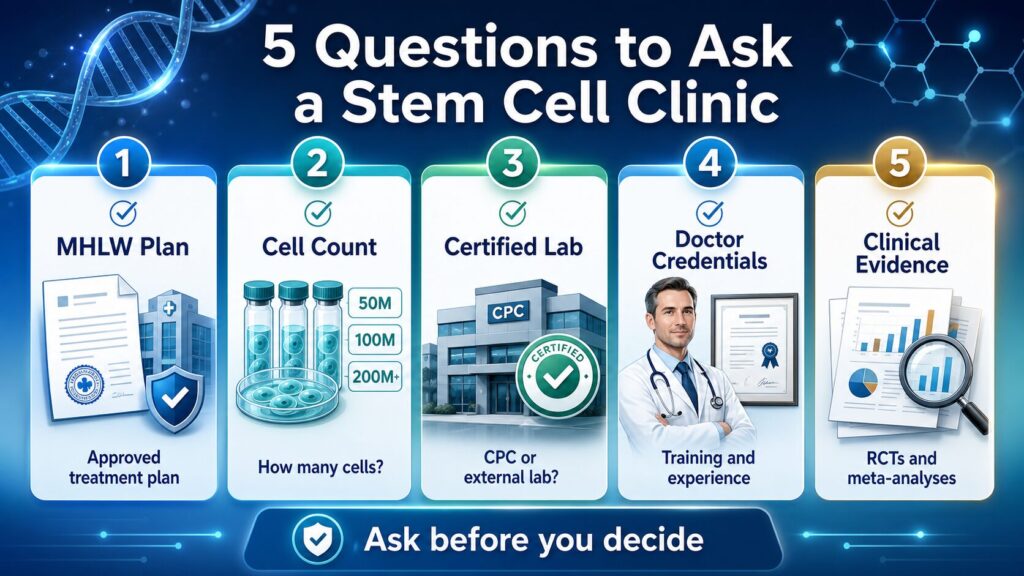
1. “What is your MHLW Regenerative Medicine Provision Plan number?”
Every legally operating clinic must have a registered plan number for each specific treatment they offer. If a clinic cannot provide this, it may not be operating within the regulatory framework. You can verify plan numbers through the MHLW database.
2. “How many cells will you administer, and how long is the cultivation period?”
Cell count matters. Research consistently shows that higher doses are associated with better outcomes. Ask whether the clinic delivers 50 million, 100 million, or 200+ million cells — and whether the culture period is measured in days or weeks. A 7-week culture with quality checkpoints is very different from a same-day procedure.
3. “Is your Cell Processing Center (CPC) externally certified?”
The CPC is where your cells spend weeks being multiplied and tested. Ask whether it is an in-house facility or an independent, certified facility — and what quality testing is performed before your cells are released for treatment.
4. “What are the physician’s qualifications and research background?”
Regenerative medicine is a specialized field. Ask whether the treating physician holds board certification in regenerative medicine (such as from the American Board of Regenerative Medicine or the Japanese Society for Regenerative Medicine etc), has published research in peer-reviewed journals, or has training in regenerative medicine field.
5. “Can you show me the published evidence for this treatment?”
A responsible clinic should be able to point you to specific meta-analyses, RCTs, or clinical studies that support the treatment they are recommending — not just patient testimonials or before-and-after photos.
Using the same four criteria recommended in this section, here is what Cell Grand Clinic discloses publicly — so you can verify each point on your own before contacting us.
| 1. MHLW Provision Plan number | MHLW Type 2 certified for cultured autologous adipose-derived MSCs. Plan number is shown on the clinic’s regenerative medicine page. |
| 2. Cell count per session | Up to 200 million autologous cells per session — not the sub-10 million ranges typical of same-day SVF procedures. |
| 3. Externally certified Cell Processing Center | Cells are cultured for the full 7-week protocol in a Japanese government-licensed CPC, with quality testing on every batch. |
| 4. Physician credentials & published research | Lead physician trained at the U.S. National Institutes of Health (NIH), board-certified in regenerative medicine, with peer-reviewed publications. 3,000+ regenerative cases treated to date. |
If those four points line up with what you’re looking for, the next step is a short, no-obligation message — usually a few sentences about your condition and the timing you’re considering. We’ll reply with whether we think we can help, what the realistic protocol would look like, and a written cost estimate.
English correspondence by the lead physician. No fees, no obligation.
9. About Cell Grand Clinic — An ABRM-Certified Regenerative Medicine Practice in Osaka
Cell Grand Clinic is a regenerative medicine practice in Shinsaibashi, Osaka, founded by Dr. Yuichi Wakabayashi (MD, PhD) — a U.S. NIH-trained physician certified by the American Board of Regenerative Medicine (ABRM). The clinic operates under MHLW Type 2 certification and has treated over 3,000 cases using ISCT-compliant, fully individualized culture of each patient’s own adipose-derived mesenchymal stem cells.
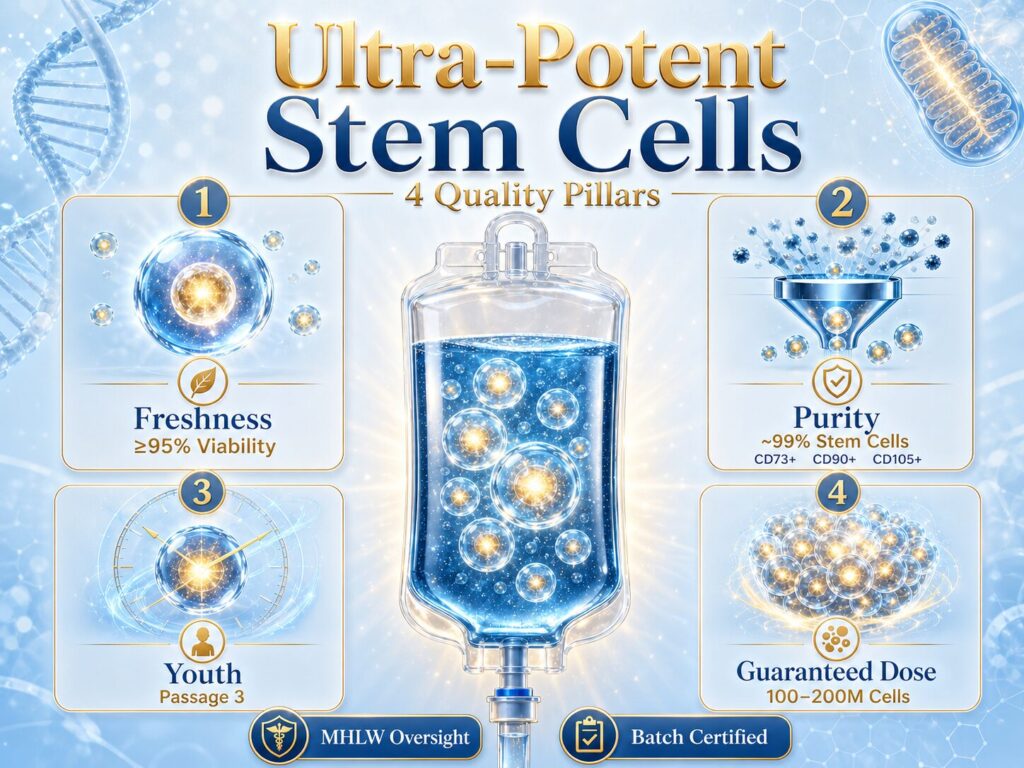
Cell quality: ISCT-compliant, individualized, never pooled
This is where the distance between regulated Japanese practice and lower-cost overseas options is largest:
- ISCT international standards — every batch meets the cell-identity and quality criteria defined by the International Society for Cell & Gene Therapy (ISCT), the global reference body for mesenchymal stem cell characterisation
- Passage 3 or earlier — cells are used at Passage 3 or below to preserve regenerative potency; later-passage cells are known to drift in surface markers and lose biological activity
- ≥95% viability per batch — confirmed before release; clinical effect depends on the proportion of live, functional cells, not the headline cell count alone
- Fully individualized culture — one patient, one culture vessel, one set of records. Never pooled across patients, never drawn from a master donor bank. The cells you receive came from your own adipose tissue and no one else’s
The lead physician: Dr. Yuichi Wakabayashi (MD, PhD)
Cell Grand Clinic was founded by Dr. Yuichi Wakabayashi, who holds both an MD and a PhD, completed research training at the U.S. National Institutes of Health (NIH), and is certified by the American Board of Regenerative Medicine (ABRM) .
Every international enquiry — eligibility, dosing, expected protocol — is reviewed by Dr. Wakabayashi personally before a written reply is sent. Dr. Wakabayashi can directly communicate with you by Emglish.
15 certified treatment plans (Type II and III licenses) —
Cell Grand Clinic holds 15 specifically approved treatment plans (Type 2 and type 3) under MHLW supervision. One of the broadest portfolios of any regenerative medicine clinic in Japan.
10. Frequently Asked Questions
Is stem cell therapy legal in Japan?
Yes. Japan is one of the few countries with a dedicated national law — the Act on the Safety of Regenerative Medicine (ASRM), enacted in 2014 — that makes stem cell therapy both legal and strictly regulated. Every clinic must submit a Regenerative Medicine Provision Plan to the Ministry of Health, Labour and Welfare (MHLW), undergo review by an independent government-certified Special Committee, and report outcomes to a national safety database. This level of government oversight is unique among major stem cell therapy markets worldwide.
How much does stem cell therapy cost in Japan?
Stem cell therapy in Japan typically ranges from $15,000 to $50,000 USD depending on the condition, cell count, and treatment protocol. Localized treatments (single joint) range from $15,000–$25,000; systemic IV treatments for conditions like diabetes or anti-aging range from $20,000–$40,000; and comprehensive multi-session packages can exceed $50,000. These prices reflect Japan’s premium regulatory environment, including physician consultation, cell harvesting, CPC cultivation, quality testing, and administration.
How many stem cells are administered per treatment in Japan?
In Japan’s MHLW-regulated clinics, cultured adipose-derived stem cell therapies typically deliver between 100 million and 200+ million cells per session. This is achieved through a 5–7 week cultivation period in a government-certified Cell Processing Center (CPC). By comparison, same-day uncultured procedures offered in some countries may deliver fewer than 10 million cells — a fundamentally different therapeutic dose that research consistently shows produces weaker outcomes.
What conditions can stem cell therapy treat?
The most commonly treated conditions in Japan include knee osteoarthritis (supported by Level I evidence from multiple meta-analyses), Type 1 and Type 2 diabetes, stroke recovery, heart failure, Alzheimer’s disease, chronic pain conditions, erectile dysfunction, and age-related frailty. Stem cells work through systemic biological mechanisms — reducing inflammation, modulating the immune system, and promoting tissue repair — which is why the same cell type can benefit seemingly unrelated conditions.
How long do I need to stay in Japan for stem cell therapy?
Most protocols require two brief visits to Japan. The first visit (1–2 days) is for medical consultation and fat tissue harvesting — a 20–30 minute outpatient procedure under local anesthesia. After approximately 5-7 weeks of cell cultivation in a certified laboratory, you return for the second visit (1–2 days) for cell administration. Total time in Japan is typically 3 days spread across two trips. Many clinics also offer initial remote consultations via video call before your first visit.
Is stem cell therapy safe? What are the risks?
A large-scale meta-analysis covering 15 years of MSC clinical trials found no significant increase in serious adverse events compared to control groups. The most common side effects are mild and transient: low-grade fever (10–20% of patients), minor pain at the harvesting site, and temporary swelling, all resolving within days. Serious adverse events occur in less than 1% of cases in regulated settings and are extremely rare with autologous (your own) cells, which eliminate the risk of immune rejection.
What is the difference between cultured and same-day stem cell therapy?
Cultured stem cell therapy grows your cells over 5–7 weeks in a certified laboratory, producing 100–200+ million cells with rigorous quality verification at each stage — including sterility, mycoplasma, endotoxin, and viability testing. Same-day (uncultured) procedures process cells immediately, delivering far fewer cells (often under 10 million) with minimal quality testing. Japan’s regulatory framework under the ASRM is specifically designed around cultured cell therapies, ensuring pharmaceutical-grade quality standards.
Reach us directly — WhatsApp and email inquiries are free of charge.
References
1. Cao M, et al. Efficacy and safety of mesenchymal stem cells in knee osteoarthritis: a systematic review and meta-analysis of randomized controlled trials. Stem Cell Res Ther. 2025;16(1):122. https://doi.org/10.1186/s13287-025-04252-2
2. Li Y, et al. A meta-analysis on application and prospect of cell therapy in the treatment of diabetes mellitus. Stem Cell Res Ther. 2025;16(1):249. https://doi.org/10.1186/s13287-025-04377-4
3. Mikłosz A, Chabowski A. Adipose-derived Mesenchymal Stem Cells Therapy as a new Treatment Option for Diabetes Mellitus. J Clin Endocrinol Metab. 2023;108(8):1889-1897. https://doi.org/10.1210/clinem/dgad142
4. Kavousi SA, et al. Efficacy of mesenchymal stem cell transplantation on major adverse cardiovascular events and cardiac function indices in patients with chronic heart failure: a meta-analysis of randomized controlled trials. J Transl Med. 2024;22:786. https://doi.org/10.1186/s12967-024-05352-y
5. Rash BG, et al. Allogeneic mesenchymal stem cell therapy with laromestrocel in mild Alzheimer’s disease: a randomized controlled phase 2a trial. Nat Med. 2025;31(4):1257-1266. https://doi.org/10.1038/s41591-025-03559-0
6. Hovhannisyan A, et al. A review and meta-analysis of stem cell therapies in stroke patients: effectiveness and safety evaluation. Neurol Sci. 2024;45:65-74. https://doi.org/10.1007/s10072-023-07032-z
7. Zhu Y, et al. Application of mesenchymal stem cell therapy for aging frailty: from mechanisms to therapeutics. Theranostics. 2021;11(12):5675-5685. https://doi.org/10.7150/thno.46436
8. Fu X, et al. Advances in stem cell therapy for erectile dysfunction: preclinical evidence and emerging therapeutic approaches. Front Med. 2025;12:1519095. https://doi.org/10.3389/fmed.2025.1519095
9. Van Delen S, et al. A systematic review and meta-analysis of clinical trials assessing safety and efficacy of human extracellular vesicle-based therapy. J Extracell Vesicles. 2024;13:e12458. https://doi.org/10.1002/jev2.12458
10. Wang Y, Yi H, Song Y. The safety of MSC therapy over the past 15 years: a meta-analysis. Stem Cell Res Ther. 2021;12(1):545. https://doi.org/10.1186/s13287-021-02609-x
11. Lu W, et al. Efficacy and safety of mesenchymal stem cell therapy in liver cirrhosis: a systematic review and meta-analysis. Stem Cell Res Ther. 2023;14(1):301. https://doi.org/10.1186/s13287-023-03518-x
12. Nawar AA, et al. Efficacy and safety of stem cell transplantation for multiple sclerosis: a systematic review and meta-analysis of randomized controlled trials. Sci Rep. 2024;14(1):12545. https://doi.org/10.1038/s41598-024-62726-4
13. Elainein MAA, et al. Therapeutic potential of adipose-derived stem cells for diabetic foot ulcers: a systematic review and meta-analysis. Diabetol Metab Syndr. 2025;17(1):9. https://doi.org/10.1186/s13098-024-01523-5
Updated: 2026.08.07