


 Inquiries by Email
 WhatsApp Reservation

Does stem cell therapy work for knees? Yes, with limits. The 2025 Cochrane review (25 randomized trials, 1,341 participants) found that stem cell injections may improve knee osteoarthritis pain and function compared with placebo, while cartilage regeneration and long-term safety remain unproven at the population level. What separates good results from disappointing ones is the cell product (cultured autologous cells vs same-day or birth-tissue “stem cell” products), the dose, and your Kellgren-Lawrence grade.
Below: where stem cells fit when NSAIDs, hyaluronic acid and cortisone stop working, what the treatment is and how it works, what the 2025 Cochrane review and RCTs actually show, why not all “stem cell” injections are the same, outcomes by KL grade, a published KL grade III case (VAS 8→0 at 13 months), how stem cells compare with knee replacement, what to expect step by step, what it costs, and the risks.
At Cell Grand Clinic (Osaka, Japan), cells are cultured from your own fat over about 7 weeks to 100 million autologous ADSCs per knee, delivered under an MHLW-notified regenerative medicine provision plan.
- When Conservative Care Stops Working — Beyond NSAIDs, HA, and Cortisone
- What Is Stem Cell Therapy for Knees and Knee Osteoarthritis?
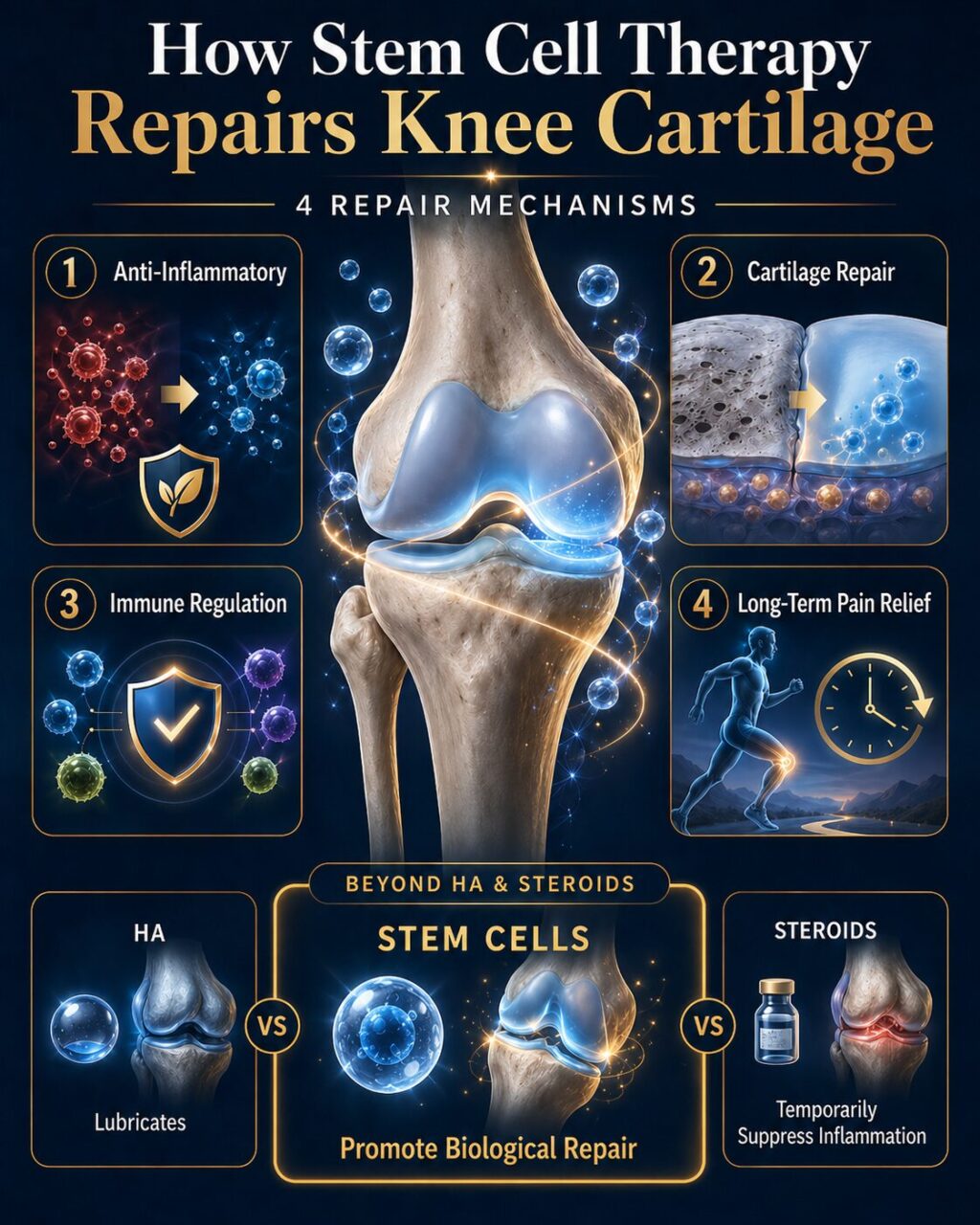
- How Stem Cells Repair Knee Cartilage — The 4 Mechanisms
- Does Stem Cell Therapy Work for Knees? What the 2025 Cochrane Review and RCTs Actually Show
- Not All “Stem Cell” Knee Injections Are the Same: Cultured Autologous ADSC vs Same-Day BMAC/SVF vs Birth-Tissue Products
- Outcomes by Kellgren-Lawrence Grade — I, II, III, and IV
- A Published Case: KL Grade III Knee, VAS 8→0 and JOA 55→95 at 13 Months (Cureus 2026)
- How Many Stem Cells Do You Need? Why 100 Million Is the Threshold
- Stem Cell Therapy vs Knee Replacement vs PRP vs Hyaluronic Acid: Which Fits Your Knee?
- What to Expect: Fat Harvest → 7-Week Culture → Injection → Follow-Up
- How Much Does Stem Cell Therapy for Knees Cost? Japan vs USA vs Mexico vs Panama
- Risks, Side Effects, and Who Should — and Should Not — Have Stem Cell Knee Injections
- Postpone the knee replacement — repair the cartilage first.
- Why Patients Choose Cell Grand Clinic in Osaka, Japan
- Frequently Asked Questions
- Conclusion: Postpone the Knee Replacement — Repair the Cartilage First
- References
When Conservative Care Stops Working — Beyond NSAIDs, HA, and Cortisone
You have probably worked through the conservative ladder already. NSAIDs help, but five years of daily use shows up in your kidneys and stomach. Hyaluronic acid felt useful for a year, then noticeably less. Steroid shots clear the flare but cannot be repeated frequently. Your orthopedist mentions a total knee replacement (TKA), but you are 60, you travel, you ski, and 6–12 weeks of recovery plus a 15-year implant lifespan are not the answer you wanted.
This is exactly the gap that stem cell therapy occupies — between symptom management that has plateaued and a major operation that may be overkill. The 2025 Cao meta-analysis confirmed not only short-term pain reduction (6-month WOMAC MD=7.44, P=0.01) but durable function improvement at 12 months (MD=10.31, P=0.03), with adipose-derived cells outperforming bone-marrow cells. That durability is what NSAIDs and HA cannot offer.
Stem cell therapy is not a guarantee, and it is not for everyone. But for the right patient — early to moderate disease, motivated, willing to travel for two visits about 7 weeks apart — it is the most evidence-supported non-surgical option available today. And while weight management and low-impact exercise help protect the cartilage you still have, there is no proven way to regenerate knee cartilage naturally once it is worn away — which is why, for cartilage repair without surgery in early-to-moderate disease, biologically active options such as autologous stem cell therapy matter.
Doctors classify knee OA severity using the Kellgren-Lawrence (KL) system based on X-ray findings:
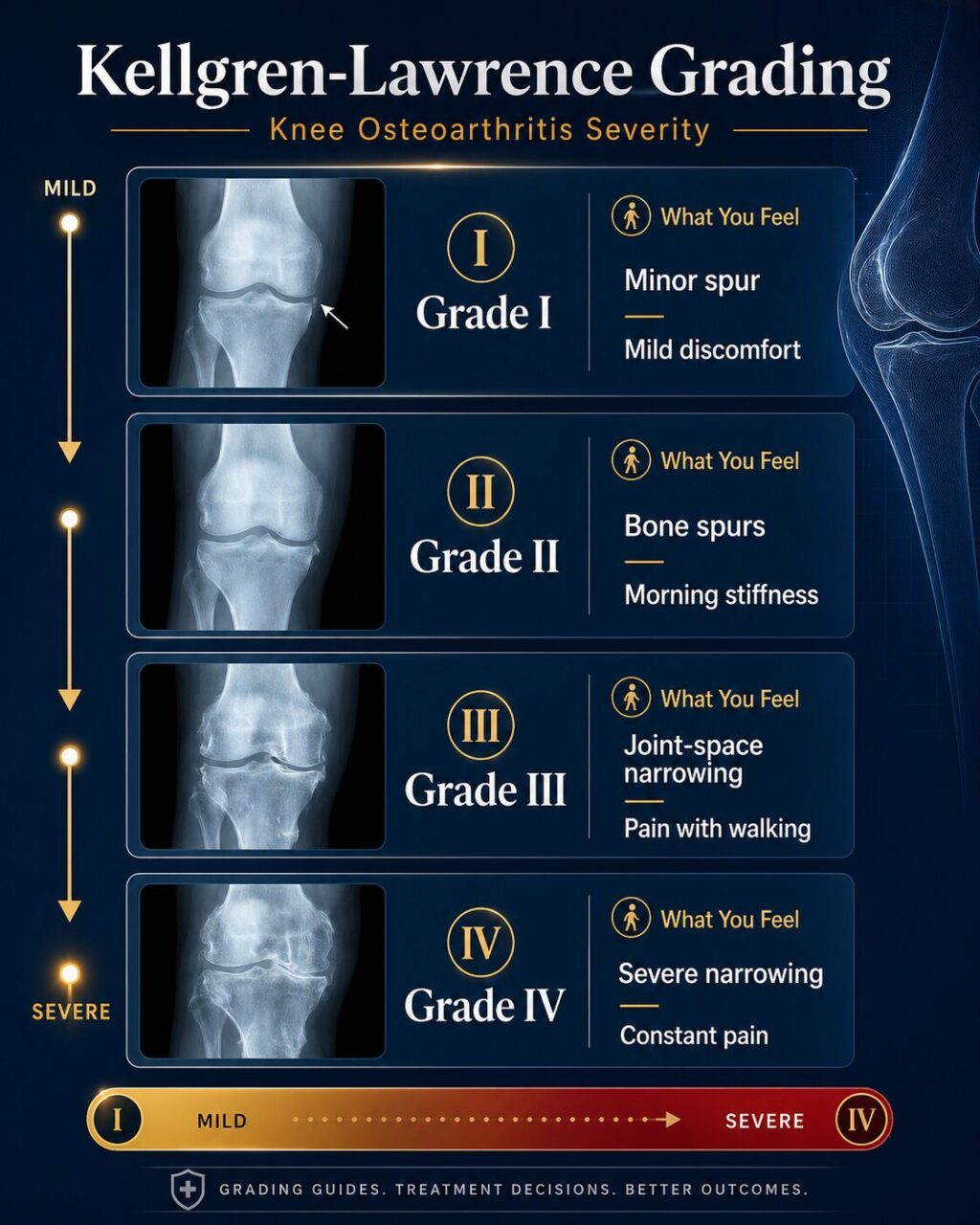
Stem cell therapy achieves the best outcomes for patients with KL Grade II–III OA, where sufficient cartilage remains for the stem cells to support repair. Even some Grade IV patients experience meaningful pain relief.
If cortisone or gel injections have already stopped helping, our companion guide lists every remaining option — PRP, culture-expanded cells, GAE, bracing, osteotomy — with the trial evidence for each and the point at which surgery becomes the better choice:
Alternatives to Knee Replacement When Injections Stop Working (2026) Read the GuideWhat Is Stem Cell Therapy for Knees and Knee Osteoarthritis?
Knee osteoarthritis is the gradual breakdown of the protective cartilage covering the ends of the femur and tibia, with thickening of underlying bone, inflammation of the joint lining, and progressive pain, stiffness, and loss of motion. Approximately 240 million people worldwide live with this disease, and 33% of adults over the age of 75 have both symptomatic and radiographic knee osteoarthritis, as documented in the 2021 review published in JAMA (Katz, Arant, and Loeser 2021).
The goal of stem cell therapy is biological disease modification at the joint level, not only symptom suppression. Unlike hyaluronic acid (which lubricates) or PRP (which delivers growth factors for several days), stem cells continuously release a cocktail of anti-inflammatory cytokines and trophic growth factors for weeks — which is why they sit on a different shelf of the treatment ladder.
A 2025 meta-analysis of 502 patients across 8 randomized controlled trials, published in Stem Cell Research & Therapy (Cao, Ou, Sheng et al. 2025), confirmed that intra-articular MSC injection alone — without surgery — significantly improves WOMAC pain and function scores at both 6 and 12 months. The treatment is appropriate for Kellgren-Lawrence Grade I-III osteoarthritis, with strongest evidence in Grade II-III. For Grade IV bone-on-bone disease, stem cells can offer meaningful pain relief but cannot rebuild a structurally collapsed joint.

How Stem Cells Repair Knee Cartilage — The 4 Mechanisms
Understanding why stem cells do something a drug cannot helps you set realistic expectations. The four mechanisms below are documented in mechanistic reviews and clinical trials.
Anti-Inflammatory Action — Calming Joint Inflammation
The first mechanism is the rapid suppression of joint inflammation. Mesenchymal stem cells secrete anti-inflammatory cytokines including IL-10, TGF-β, and PGE2, which quiet the pro-inflammatory cascade driving osteoarthritis pain. This effect begins within days and is sustained for weeks, as detailed in the 2020 mechanistic review published in Trends in Pharmacological Sciences (Song, Scholtemeijer, and Shah 2020).
Cartilage Protection and Repair — Can Knee Cartilage Grow Back?
The second mechanism is cartilage protection and regenerative signaling. MSCs release trophic factors that support chondrocyte (cartilage cell) survival and stimulate matrix production, while reducing the catabolic enzymes (MMPs, aggrecanases) that degrade cartilage. A 2023 review of 26 clinical studies (15 RCTs plus 11 non-RCTs, totaling 610 patients) published in Cellular & Molecular Immunology (Copp, Robb, and Viswanathan 2023) documented cartilage protection or repair in 18 of 21 clinical studies. Stem cells do not rebuild a fully collapsed joint, but they preserve and modestly regenerate cartilage thickness in early-to-moderate disease.
Immune System Regulation — Long-Term Joint Homeostasis
The third mechanism is immune modulation — MSCs reprogram the local joint immune environment from a pro-inflammatory state to a homeostatic one. This explains the durability of effect: even after the injected cells are cleared, the local immune landscape remains better regulated for months, per the same 2023 Copp et al. analysis.
Sustained Pain Relief — 12+ Months Documented
The fourth mechanism is the sustained downstream effect on pain. The 2025 Cao meta-analysis confirmed significant WOMAC pain score improvement at both 6 and 12 months. A separate 5-year follow-up study published in Stem Cells Translational Medicine (Kim, Lee, Kim et al. 2022) demonstrated that a single intra-articular high-dose (1×10⁸ cells) autologous ADMSC injection provided pain and functional improvement maintained for 5 years.
Does Stem Cell Therapy Work for Knees? What the 2025 Cochrane Review and RCTs Actually Show
| Outcome (stem cell vs placebo injection) | Result | Certainty of evidence |
|---|---|---|
| Pain, 0–10 scale, up to 6 months | 4.5 with placebo; 1.2 points better with stem cells (7 trials, 445 participants) | Low |
| Function, 0–100 scale (0 = best), up to 6 months | 46.3 with placebo; 14.2 points better with stem cells (7 trials, 432 participants) | Low |
| Treatment success (patient-reported), end of follow-up | 683 vs 530 per 1,000 — RR 1.29 (4 trials, 348 participants) | Very low |
| Serious adverse events | 16 vs 23 per 1,000 — no significant difference (7 trials, 461 participants) | Very low |
| Radiographic progression (joint structure) | Not assessed in any included trial | — |
Two things in that table deserve a plain-language translation. First, the direction of the evidence is positive: across placebo-controlled trials, patients who received stem cell injections reported less pain, better function and more often called the treatment a success. Second, the authors downgraded their confidence for a specific reason — indirectness. The trials pooled different products (bone marrow, adipose, umbilical cord), different preparation methods (same-day concentrates vs culture-expanded cells) and doses ranging from a few million to over 100 million cells. A meta-analysis that mixes those together can only tell you that “stem cell injections, on average, may help a little.” It cannot tell you what a high-dose, culture-expanded, autologous adipose-derived protocol does. For that, you need the trials that isolate those variables — which is what the next evidence layer provides.
Culture-Expanded MSCs at High Dose: The 2025 Cao Meta-Analysis
| Outcome Measure | 6-Month Result | 12-Month Result | P-Value |
|---|---|---|---|
| Total WOMAC | MD = 7.44 (95% CI 1.45–13.42) | MD = 10.31 (95% CI 0.96–19.67) | P=0.01 / P=0.03 |
| WOMAC Pain | MD = 1.13 | MD = 1.03 | P=0.001 / P=0.04 |
| WOMAC Stiffness | MD = 0.49 | MD = 0.65 | P=0.01 / P=0.04 |
| WOMAC Function | MD = 3.36 | MD = 0.82 (ns) | P=0.006 / P=0.76 |
| 100-mm VAS Pain | MD = 19.39 | MD = 16.21 | P=0.0008 / P=0.0003 |
| Adverse Events (vs control) | No significant difference | — | P=0.21 (ns) |
| Serious Adverse Events (vs control) | No significant difference | — | P=0.69 (ns) |
The Cao et al. 2025 meta-analysis is the strongest current evidence summary. It pooled 8 RCTs of 502 knee osteoarthritis patients who had not received any surgical treatment. The intervention was intra-articular injection of MSCs without any other adjuvant therapy. Across the full pooled cohort, MSC-treated patients showed statistically significant improvement over control at both 6 and 12 months in total WOMAC, WOMAC subscales (pain, stiffness, function), and 100-mm VAS pain score.
Equally important is what the meta-analysis found about safety: adverse events did not differ significantly between MSC and control groups (P=0.21), and serious adverse events also did not differ (P=0.69). For a regenerative therapy in 2025, this is a meaningful signal. Combined with a 5-year follow-up by Kim et al. 2022 showing no treatment-related adverse events across 5 years post-injection, the safety profile of autologous ADSC therapy is at least as favorable as conventional intra-articular treatments.
Read together, Cochrane and Cao point in the same direction. Cochrane says stem cell injections probably help but the trials are too heterogeneous to be confident; Cao, restricting the analysis to culture-expanded mesenchymal stem cells given without surgery, finds significant 6- and 12-month improvement, larger effects for adipose-derived than bone-marrow cells, and a clear dose–response with 100 million cells as the threshold. The practical conclusion for a patient is not “stem cells work” or “stem cells don’t work.” It is: the product, the dose and your KL grade decide the outcome — and those are the three things you should ask any clinic about before you pay.
Not All “Stem Cell” Knee Injections Are the Same: Cultured Autologous ADSC vs Same-Day BMAC/SVF vs Birth-Tissue Products
| Property | Culture-expanded autologous ADSC | Same-day BMAC / SVF | Birth-tissue products (amniotic fluid, umbilical cord, Wharton’s jelly) |
|---|---|---|---|
| Source | Your own fat (outpatient harvest), expanded in a licensed cell processing facility for ~7 weeks | Your own bone marrow (iliac aspirate) or fat, processed in the clinic the same day | Donor birth tissue, processed and frozen for general use |
| Stem cell count per knee | Counted before injection — 100 million at Cell Grand Clinic | Rarely counted; composition reporting is inconsistent (Piuzzi 2018: only 30% of 46 clinical studies reported quantitative composition) | Independent analyses found no viable mesenchymal stem cells in commercial amniotic fluid products (Panero 2019) or a cord blood product (Fortier 2021) |
| Identity and viability testing | ISCT surface markers (CD73/CD90/CD105); viability verified before injection | Usually none at point of care | Manufacturer claims; independent testing has contradicted them |
| Immune rejection / donor infection risk | None (your own cells) | None (your own cells) | Donor-dependent |
| Evidence in knee OA | Cao 2025 ADSC subgroup: 6-month WOMAC MD 7.53 (P<0.00001); Kim 2023 Phase III RCT (n=261) | Cao 2025 BM-MSC subgroup: MD −6.30 (P=0.27, ns) | No placebo-controlled RCT as a “stem cell” therapy; growth-factor content only |
| Typical regulatory status | Japan: MHLW-notified provision plan under the Act on the Safety of Regenerative Medicine | Varies; in the US, same-day autologous procedures are marketed under the “minimal manipulation” pathway | US FDA consumer alert (2020, updated 2024): products derived from umbilical cord blood, Wharton’s jelly or amniotic fluid are not approved for orthopedic use |
Tissue of origin. The 2025 Cao subgroup data favor adipose. Adipose-derived cells are easier to harvest (a brief outpatient procedure rather than a bone marrow aspirate), more abundant per gram of tissue, and produced the statistically significant 6-month WOMAC effect that bone-marrow MSCs did not in the pooled analysis. A 2024 randomized study published in Journal of Translational Medicine (Sun, Zhai, Han et al. 2024) added a biological explanation: outcomes of autologous AD-MSC therapy correlate with each patient’s own cell stemness and senescence markers — which is what passage-limited culture is designed to preserve.
Same-day vs cultured. A same-day concentrate is fast and inexpensive, but nobody counts the stem cells in it. Mesenchymal stem cells are a tiny fraction of the nucleated cells in bone marrow or fat, and a 2018 systematic review of 46 clinical BMAC studies published in The Journal of Bone and Joint Surgery (Piuzzi et al. 2018) found that no study described its preparation well enough to be reproduced and only 30% reported what was actually in the final product. Culture expansion exists to solve that problem: it turns an unknown number of cells into a counted, characterized dose.
Birth-tissue products. Amniotic fluid, amniotic membrane and umbilical cord products are widely marketed in the United States as “stem cell injections.” When independent laboratories cultured commercial amniotic fluid products under the same conditions that grow bone-marrow MSCs, they could not identify mesenchymal stem cells in any of them, and the few living cells present did not have MSC characteristics (Panero et al. 2019, American Journal of Sports Medicine). A Cornell University analysis of a cord blood product found the cells were primarily leukocytes and no stem cells were present (Fortier et al. 2021). These products may still carry growth factors, but they are not stem cell therapy. If a clinic offers a “stem cell” injection without a fat or marrow harvest from you, ask what is in the syringe.
Outcomes by Kellgren-Lawrence Grade — I, II, III, and IV
| KL Grade | Disease Stage | Symptom Relief | Best Evidence | Treatment Recommendation |
|---|---|---|---|---|
| I | Early — minor osteophytes, normal joint space | Excellent (long-term) | Cao 2025 (durability), Kim 2022 (5-year) | Ideal candidate — combine with weight management and exercise |
| II | Mild — definite osteophytes, possible joint space narrowing | Excellent | Cao 2025 pooled, Kim 2022 | Strong candidate — high long-term benefit |
| III | Moderate — multiple osteophytes, joint space narrowing, sclerosis | Strong (Phase III RCT) | Kim 2023 Phase III RCT (n=261, VAS 25.2 vs 15.5, P=.004) | Strongest RCT evidence — primary indication for treatment |
| IV | Severe — large osteophytes, bone-on-bone joint space loss, deformity | Modest — pain relief but no structural rebuild | Cao 2025 (subgroup), Kim 2022 (long-term) | Consider when TKA contraindicated or declined — TKA preferred for surgical candidates with deformity |
KL Grade I-II — Early Disease — Best Long-Term Outcomes
For early-stage KL I-II disease, stem cell therapy is ideally positioned. The cartilage is thinning but still functional, the joint structure is preserved, and the regenerative environment is most responsive. Patients in this range typically experience the largest long-term benefit. Combined with weight management and targeted exercise, KL I-II patients can often delay or entirely avoid surgical intervention.
KL Grade III — Moderate Disease — Strongest RCT Evidence
KL Grade III is the grade where stem cell therapy has the strongest Phase III randomized controlled trial evidence. A 2023 Phase III, multicenter, double-blind, placebo-controlled trial (NCT03990805) of 261 patients with KL Grade 3 symptomatic knee osteoarthritis, published in The American Journal of Sports Medicine (Kim, Lee, Lee et al. 2023), showed that a single intra-articular injection of autologous culture-expanded ADMSCs produced significantly greater 100-mm VAS pain reduction (25.2 vs 15.5, P=.004) and total WOMAC improvement (21.7 vs 14.3, P=.002) than placebo at the 6-month primary endpoint, with no serious treatment-related adverse events.
KL Grade IV (Bone-on-Bone) — When Stem Cells Help and When Surgery Is Better
At KL Grade IV, stem cells will not rebuild the joint. What they can offer is meaningful pain reduction and functional improvement — particularly valuable for patients who cannot undergo TKA because of age, comorbidities, anticoagulation requirements, or personal preference. For surgical candidates with severe deformity, surgical cartilage replacement or total knee replacement remains the better long-term choice. For non-surgical candidates, stem cell therapy is the most effective non-surgical pain-and-function intervention currently supported by 2025 meta-analytic data.
A Published Case: KL Grade III Knee, VAS 8→0 and JOA 55→95 at 13 Months (Cureus 2026)
| Time point | Pain (VAS, 0–10) | Function (JOA knee score, 0–100) |
|---|---|---|
| Baseline (after hyaluronic acid and PRP gave only transient relief) | 8 | 55 |
| ~2.5 months after injection | 1 | 90 |
| ~13 months after injection | 0 | 95 |
A KL Grade III Knee, Treated Without Joint Replacement — 13-Month Follow-Up, Published by Our Director
Our medical director published a peer-reviewed case report in Cureus (Springer Nature, 2026) on one patient with Kellgren–Lawrence grade III knee osteoarthritis and a lateral meniscus lesion who chose not to undergo total knee replacement in order to keep working. After hyaluronic acid and leukocyte-rich PRP gave only temporary relief, an intra-articular injection of the patient’s own cultured adipose-derived mesenchymal stem cells (ADMSC) was performed.
This is a single-patient case report and does not guarantee the same outcome for others; responses vary by individual. The authors note the pre-treatment cartilage MRI was taken on a different scanner, which limits direct quantitative comparison. Care is provided under Japan’s Act on the Safety of Regenerative Medicine (provision plan PB5240089) as self-funded treatment.
Read the full peer-reviewed paper →Why one case matters — and what it cannot tell you. A single patient cannot prove a treatment works; that is what the randomized trials above are for. What a published case adds is transparency: the cell count, viability, plan number and follow-up were reported in a peer-reviewed, open-access journal that anyone can read. Few clinics that market stem cell injections publish their outcomes at all.
Treatment: intra-articular injection of cultured autologous adipose-derived mesenchymal stem cells, provided as self-funded (non-insured) care under a plan notified to Japan’s Ministry of Health, Labour and Welfare (Act on the Safety of Regenerative Medicine, plan number PB5240089).
Cost: from JPY 2,970,000 (approx. USD 19,800) per session, tax included.
Main risks: pain, swelling or bruising at the harvest and injection sites; infection (including a small risk of septic arthritis with any joint injection); allergic reaction to local anesthetic; transient increase in knee pain after injection.
Note: results shown are for one patient; individual results vary and the same outcome is not assured. The pre-treatment MRI was acquired on a different scanner, which limits quantitative comparison.
How Many Stem Cells Do You Need? Why 100 Million Is the Threshold
| Dose Tier | Cells per Knee | 6-Month WOMAC Effect | 12-Month WOMAC Effect | Clinical Interpretation |
|---|---|---|---|---|
| Low | 10–64 million | MD = 3.20 (P=0.16, ns) | MD = 4.84 (P=0.03) | Marginal — below threshold for durable signaling |
| High | ≥100 million (1×10⁸) | MD = 8.14 (P=0.002) | MD = 14.25 (P<0.0001) | Significantly better at both time points — operational standard |
| CGC standard | Guaranteed ≥100 million ADSCs per knee | Follows Cao high-dose tier | Follows Cao high-dose tier | Cell Grand Clinic’s Grand Stem Cell protocol |
Why dose matters biologically is straightforward: stem cells exert their effects through paracrine signaling — molecules released into the joint at concentrations proportional to cell number. Below a threshold dose, the signaling cascade is too weak to durably modulate the inflammatory and reparative environment. The Cao 2025 subgroup analysis quantified this for the first time in pooled data.
This is also why early Phase I dose-escalation work added important nuance. The 2016 Phase I trial published in Stem Cells Translational Medicine (Pers, Rackwitz, Ferreira et al. 2016) randomized 18 patients with severe knee osteoarthritis to three dose cohorts (2 million, 10 million, or 50 million autologous adipose-derived stem cells) and found that even low-dose patients experienced significant WOMAC improvement at 6 months, with no serious adverse events across all cohorts. The takeaway is not “more is always better at any dose” — it is “100 million is the threshold below which the 2025 meta-analytic data become marginal.” Cell Grand Clinic guarantees a minimum of 100 million quality-verified ADSCs per knee treatment.
Torn Meniscus Without Surgery: A Stem Cell Treatment Option Read ArticleStem Cell Therapy vs Knee Replacement vs PRP vs Hyaluronic Acid: Which Fits Your Knee?
| Property | Culture-expanded ADSC injection | Total knee replacement (TKA) | PRP | Hyaluronic acid | Cortisone |
|---|---|---|---|---|---|
| Best-suited KL grade | I–III (IV for pain relief in non-surgical candidates) | IV, or III with deformity/instability | I–II | I–III | Any (short term) |
| What it does | Anti-inflammatory and trophic signaling; cartilage protection; pain and function improvement documented to 12 months (Cao 2025) and 5 years in one RCT cohort (Kim 2022) | Replaces the joint surface; definitive for bone-on-bone disease | Growth factors for days to weeks | Lubrication for months | Suppresses inflammation for weeks |
| Procedure / recovery | Two outpatient visits; walk out the same day | Major surgery; 6–12 weeks recovery; implant lifespan around 15 years | Same-day injection | Same-day injection | Same-day injection |
| Repeatability | Additional injection considered at ~12 months if needed | Revision surgery | Series of injections | Every 6–12 months | Limited — repeated use is generally discouraged |
For a full comparison of every non-surgical option by KL grade, see our guide to alternatives to knee replacement when injections stop working. For meniscus tears specifically, see stem cell therapy for a torn meniscus.
What to Expect: Fat Harvest → 7-Week Culture → Injection → Follow-Up
| Step | What happens | Where you are | Time |
|---|---|---|---|
| 1. Online consultation | Dr. Wakabayashi reviews your X-ray/MRI, assigns a Kellgren-Lawrence grade and discusses candidacy in English (JPY 55,000 per person, credited toward treatment) | Home | 60 min |
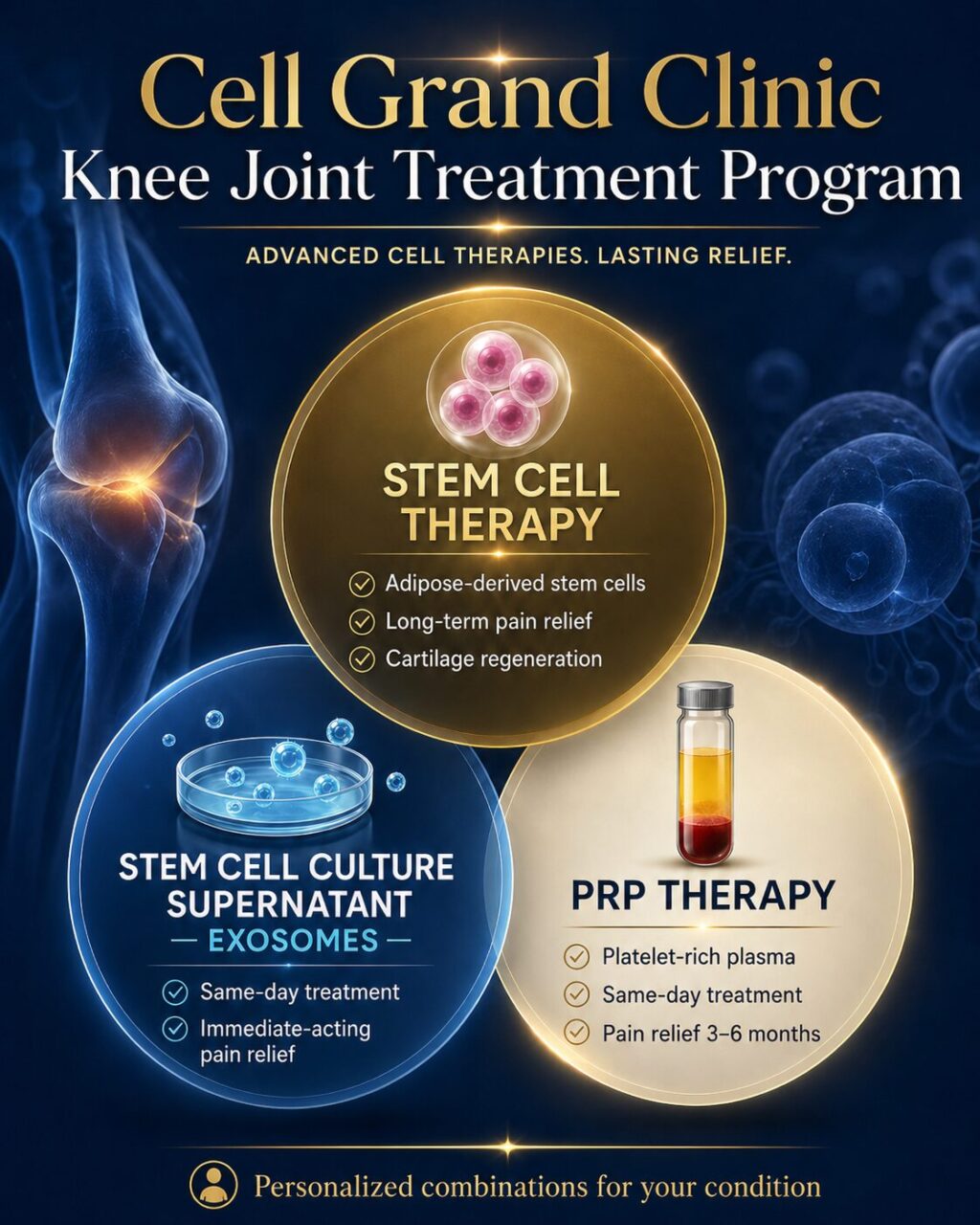
| 2. Visit 1 — fat harvest | Local anesthesia, ~30 minutes, usually from the abdomen; blood tests the same day. Optional exosome or PRP injection into the knee as a bridge treatment while your cells are cultured | Osaka (about 3 days) | Half day |
| 3. Cell culture | Your cells are expanded in a licensed cell processing facility to 100 million ADSCs, within passage 3, with identity (ISCT markers) and viability testing | Home | ~7 weeks |
| 4. Visit 2 — injection | Ultrasound-guided intra-articular injection, ~30 minutes including preparation; observation, then you walk out. No hospitalization, no general anesthesia | Osaka (about 3 days) | 60–90 min |
| 5. Follow-up | Symptom, range-of-motion and activity check at 1, 3 and 6 months; an additional injection is considered at about 12 months if the first is insufficient | Home | Remote |
Share your MRI/X-ray results with our medical team for preliminary assessment.
Minimally invasive fat harvest (~30 minutes) under local anesthesia. Return to your hotel immediately.
⚡ Don’t wait 7 weeks in pain
During Visit 1, your doctor may also administer Exosome Therapy or PRP (Platelet-Rich Plasma) injection directly into your knee. These treatments provide immediate anti-inflammatory and pain-relieving effects — helping you manage your current knee pain while your stem cells are being cultured over the next 7 weeks. Think of it as a “bridge treatment” that starts working right away, so you don’t have to endure unnecessary discomfort while waiting for your personalized stem cells to be ready.
Your cells are processed and expanded at our specialized CPC. Return home while we cultivate your cells to therapeutic levels — 100 million Grand Stem Cells.
✓ If you received Exosome/PRP in Visit 1, these continue working to relieve pain during this waiting period.
Return to Osaka for stem cell administration via direct intra-articular injection (~30 minutes including preparation).
Note: Repeat treatments may be recommended depending on disease severity.
How Much Does Stem Cell Therapy for Knees Cost? Japan vs USA vs Mexico vs Panama
| Provider / country | Product | Price (per knee or session) | Cell count stated? | Source |
|---|---|---|---|---|
| Cell Grand Clinic (Osaka, Japan) | Culture-expanded autologous ADSC, 100 million cells, approx. 98% viability | from JPY 2,970,000 (approx. USD 19,800), tax included; includes blood tests and fat harvest | Yes | Published on this site (pricing) |
| United States | Same-day BMAC or adipose concentrate | USD 5,000–12,000 per knee | Usually no | Bookimed, “The Cost of Stem Cell Therapy for Knees” (accessed 2026-09-17) |
| United States | Culture-expanded (bone marrow or adipose) | USD 15,000–30,000 | Varies | BioInformant, “The Cost of Stem Cell Therapy in 2026” (updated 2026-09-16) |
| Panama | Mostly donor umbilical cord MSCs | USD 10,000–30,000 | Varies | BioInformant (same article) |
| Mexico | Not specified | USD 2,000–4,000 | Usually no | Bookimed (same article) |
What is not included: travel and accommodation for two visits to Osaka (about 3 days each), the online consultation (JPY 55,000 per person, credited toward treatment), and any optional bridge treatment (exosome or PRP) at Visit 1. Stem cell therapy for knee osteoarthritis is not covered by Japanese public insurance or by most overseas insurers.
Why a “cheap” injection can cost more: a USD 5,000 same-day injection that delivers an uncounted number of cells and needs to be repeated is not necessarily cheaper than one counted, high-dose treatment. When comparing quotes, ask for the cell type, the number of cells, the viability at injection and what happens if the first injection is insufficient. Cell Grand Clinic prices a repeat session from stored cells at the same rate as the first session, and cells can be stored for up to five years. Full details are on our pricing page.
Risks, Side Effects, and Who Should — and Should Not — Have Stem Cell Knee Injections
Known and possible risks. Common and temporary: pain, swelling or bruising at the fat harvest site and in the injected knee for a few days; a transient flare of knee pain after injection. Uncommon: infection at either site, including septic arthritis; allergic reaction to local anesthetic; bleeding in patients on anticoagulants. Theoretical: the Cochrane authors note that the long-term risks of injecting cells with the capacity to grow remain unknown at the population level; in autologous, passage-limited cultured cells, tumor formation has not been reported in the trials cited on this page, and no serious treatment-related adverse events were recorded in the Phase III RCT (Kim 2023) or the 5-year follow-up (Kim 2022).
Who should not be treated. Cell Grand Clinic does not treat patients who are HIV-positive; active infection, active cancer under treatment, and uncontrolled diabetes or anticoagulation are assessed individually and may postpone treatment. KL grade IV knees with significant deformity in a patient who is a surgical candidate are usually better served by knee replacement. There is no fixed upper age limit: patients in their 80s have been treated, and the 7-week culture allows older patients’ cells to reach the full dose within the passage-3 limit.
This therapy is particularly effective for:
- Kellgren-Lawrence Grade II-III OA: Patients with moderate degeneration typically see the best outcomes
- Hyaluronic acid, steroid injections, or PRP no longer provide lasting relief
- Active individuals: Those who want to continue sports (golf, tennis, hiking) that may become impossible after joint replacement
- Surgery-averse patients: Those who cannot or prefer not to undergo general anesthesia and prolonged rehabilitation
- Patients seeking to delay surgery: Even in advanced cases, stem cell therapy can reduce pain and potentially postpone surgical intervention
Postpone the knee replacement — repair the cartilage first.
Stem cell therapy — from JPY 2,970,000 (approx. USD 19,800) per session, tax included
The session price includes:
- 100 million autologous ADSCs
- 7-week culture at MHLW-certified CPC · passage ≤3
- Quality certificate · approx. 98% viability
- 1 / 3 / 6 month remote follow-up
Final pricing depends on your individual case:
- Combination protocols
- Multiple sessions
Have Dr. Wakabayashi review your case.
Share your medical history and current treatments. Dr. Wakabayashi reviews each international inquiry and responds with a written feasibility note, recommended protocol, and quote. Typical turnaround: 1–3 business days.
Why Patients Choose Cell Grand Clinic in Osaka, Japan
Grand Stem Cell — Four Quality Standards (Fresh / Pure / Young / Dose)
Cell Grand Clinic’s Grand Stem Cell protocol guarantees four specific standards on every knee treatment.
1. Fresh — Cultured Exclusively for You, No Batch Pooling. Every batch of cells is expanded from your own fat tissue over a seven-week culture process, with every batch dedicated to one patient only. No pooling across patients. No frozen storage of finished product. The cells are delivered fresh, peaking in biological activity at the time of administration.
2. Pure — ISCT-Standard FACS Verification (CD73/CD90/CD105 near-100%). Surface-marker testing follows the global standard of the International Society for Cell & Gene Therapy. Cells must express CD73, CD90, and CD105 at near-100% positivity, and must be negative for hematopoietic markers (CD45, CD34). Cells that do not meet these defining mesenchymal stem cell criteria are discarded, not delivered.
3. Young — Passage 3 Strict Limit Preserves Regenerative Capacity. Stem cells age with each passage (laboratory division cycle). Grand Stem Cells are strictly limited to Passage 3 or below — a practice biologically validated by Sun et al. 2024, which showed that clinical outcomes correlate with cellular stemness and senescence markers.
4. Dose — Guaranteed 100 Million+ Cells, Approx. 98% Viability. Viability is verified (approximately 98%) immediately before administration, with the dose guaranteed at a minimum of 100 million cells per knee — the threshold confirmed by 2025 Cao meta-analytic dose-response data.
Every patient at Cell Grand Clinic receives a Certificate of Quality documenting that their Grand Stem Cells met all four standards before administration.
Cell Quality: The Key Factor That Impacts Stem Cell Therapy Outcomes Learn More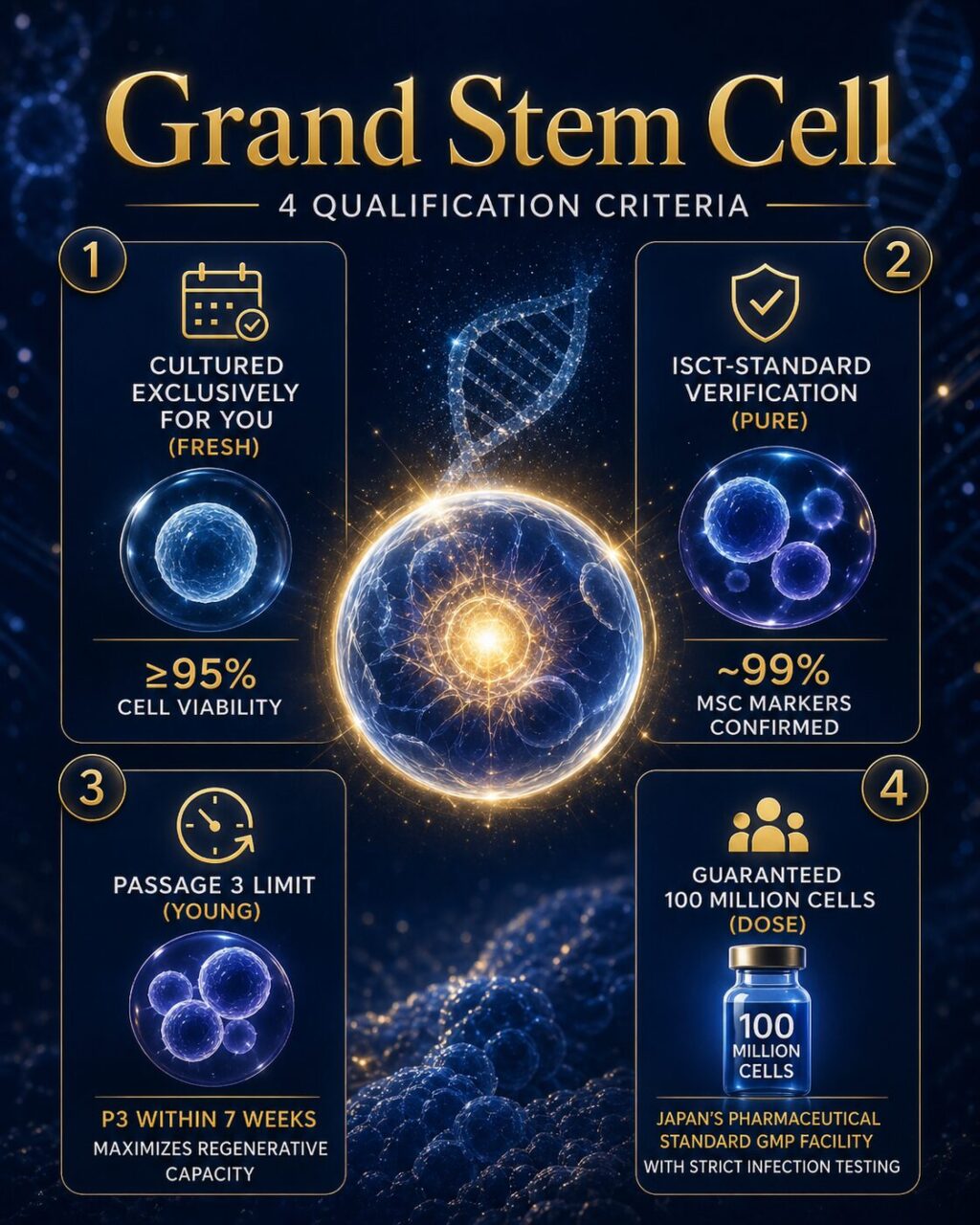
Dr. Yuichi Wakabayashi — ABRM, NIH-trained, 3,000+ Cases
Dr. Yuichi Wakabayashi, M.D., Ph.D., is American Board of Regenerative Medicine (ABRM) certified, NIH-trained, and has personally managed more than 3,000 stem cell cases across approximately 20 countries. He personally conducts every step of every patient’s treatment — consultation, fat harvest, supervision of cell culture, intra-articular injection, and 1/3/6-month follow-up. He has authored seven peer-reviewed English-language publications, including a 2026 case report on knee osteoarthritis in Cureus. Cell Grand Clinic is featured in The Wall Street Journal, is a Medical Excellence JAPAN member clinic, and is a 2026 Healthcare Business Review APAC Top Regenerative Medicine Solution in APAC awardee.
15 MHLW-Notified Treatment Plans
Cell Grand Clinic holds one of the broadest portfolios of any regenerative medicine clinic in Japan. Our knee OA treatment is not “experimental” or “off-label.” It is provided under a provision plan notified to Japan’s Ministry of Health, Labour and Welfare and reviewed by a certified special committee for regenerative medicine.
Compare this to the situation in many other countries, where stem cell clinics operate with little regulatory oversight, using uncharacterized cell preparations with no quality control requirements.
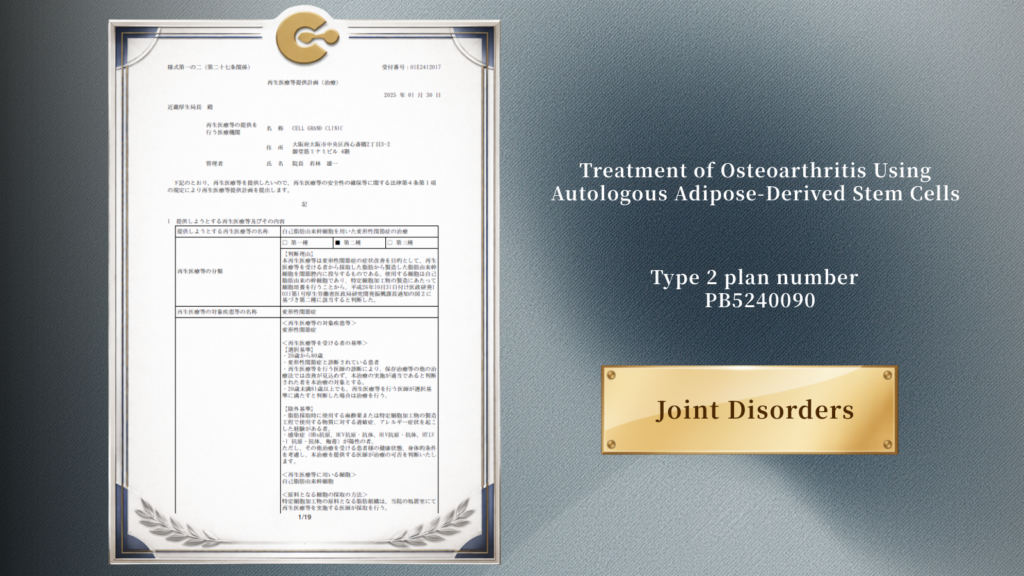
Japan’s regulatory framework. Japan regulates cell-based treatment directly under the Act on the Safety of Regenerative Medicine (2014). A clinic providing cultured autologous cell therapy must have its treatment plan reviewed by an MHLW-certified special committee for regenerative medicine, notify the plan to the Ministry of Health, Labour and Welfare, use a licensed cell processing facility subject to inspection, report adverse events, and keep consent and traceability records. Cultured autologous cells such as ADSC for joint disease fall under Type 2 of the Act’s three risk classes. Cell Grand Clinic has 15 MHLW-notified regenerative medicine provision plans; knee osteoarthritis treatment with cultured autologous ADSCs is one of them (plan PB5240089), with documented dose, indication and ongoing safety reporting. Mexico, Panama and the Cayman Islands do not have an equivalent national framework for autologous cell processing, and most overseas clinics there rely on donor stock cells produced for general use.
Practical points for international patients. Consultations are in English directly with the physician; Mandarin interpretation is available; each visit takes about 3 days; there is one in-house consultation fee (JPY 55,000, credited toward treatment). See our guide for American patients and guide for Singapore patients, or request a consultation.
Frequently Asked Questions
Q1: Does stem cell therapy work for knees?
Yes, with limits. The 2025 Cochrane review of 25 randomized trials found that stem cell injections may improve knee osteoarthritis pain (about 1.2 points on a 0–10 scale) and function compared with placebo at up to 6 months, with low-certainty evidence because products and doses varied. Trials restricted to culture-expanded MSCs (Cao 2025, 8 RCTs, 502 patients) show significant 6- and 12-month WOMAC improvement, strongest for high-dose adipose-derived cells.
Q2: How much does stem cell therapy for knees cost?
At Cell Grand Clinic in Osaka, culture-expanded autologous ADSC therapy for knees starts from JPY 2,970,000 (approx. USD 19,800) per session, tax included, for 100 million cells — including blood tests, fat harvest, quality testing (approx. 98% viability) and 1/3/6-month remote follow-up. Same-day injections in the United States are typically USD 5,000–12,000 per knee; culture-expanded protocols USD 15,000–30,000. Travel and the JPY 55,000 online consultation (credited toward treatment) are additional.
Q3: How long do stem cell knee injections last?
Clinical evidence demonstrates sustained improvement at 12 months in the 2025 Cao meta-analysis, with 5-year durability documented for a single high-dose (1×10⁸ cells) autologous ADMSC injection in Kim et al. 2022 (Stem Cells Translational Medicine). Individual results vary based on KL grade, activity level, and overall health. An additional injection is considered at about 12 months if the first is insufficient.
Q4: Is stem cell therapy for knees safe? What are the side effects?
Randomized trials show no significant difference in adverse events versus control (Cao 2025) and no treatment-related adverse events over 5 years after a single high-dose injection (Kim 2022). Common side effects are temporary pain, swelling or bruising at the fat harvest site and in the injected knee. Any joint injection carries a small risk of infection, including septic arthritis. Long-term, population-level safety evidence is still rated very low certainty by the 2025 Cochrane review.
Q5: Stem cell therapy or knee replacement — which is better?
They answer different problems. Total knee replacement is definitive for bone-on-bone (KL grade IV) knees with deformity. Culture-expanded stem cell therapy is for KL grade I–III knees that still have cartilage to protect and where conservative care has failed; it aims to postpone or avoid surgery. Many patients use it to keep working or playing sport while deferring a replacement.
Q6: Is stem cell therapy effective for bone-on-bone (KL Grade IV) knees?
Stem cells cannot rebuild a fully collapsed joint surface. For KL Grade IV patients who cannot undergo TKA or who choose not to, stem cell therapy is the most effective non-surgical pain-and-function intervention available — based on Cao 2025 meta-analytic data — and can provide meaningful pain reduction and improved daily function for 1–2 years. For surgical candidates with severe deformity, TKA is the better long-term choice.
Q7: What is the success rate of stem cell therapy for knees?
There is no single success rate. The 2025 Cao meta-analysis demonstrated statistically significant WOMAC improvement in the pooled MSC group at both 6 and 12 months, with high-dose adipose-derived protocols showing the largest effect sizes. A 2023 Phase III RCT in KL Grade 3 patients (Kim, Lee, Lee et al. 2023) showed VAS reduction of 25.2 versus 15.5 for placebo (P=.004) at 6 months. “Success” rates depend on KL grade, dose, and individual response — but the evidence base for symptomatic improvement at 6 and 12 months is strong. In the 2025 Cochrane pooled analysis, 68% of stem-cell-treated patients reported treatment success versus 53% with placebo (very low-certainty evidence).
Q8: Are amniotic or umbilical cord “stem cell” injections the same thing?
No. Independent laboratory studies found no viable mesenchymal stem cells in commercial amniotic fluid products (Panero et al. 2019) or in a cord blood product (Fortier et al. 2021); the cells present were mostly dead or were leukocytes. These products may contain growth factors, but they are not stem cell therapy. Culture-expanded autologous cells are counted and characterized (ISCT markers, viability) before injection.
Q9: Can knee cartilage grow back?
Knee cartilage has very limited natural ability to regrow because it has no direct blood supply, and no treatment fully regrows a structurally collapsed joint. In early-to-moderate (KL I–III) osteoarthritis, however, mesenchymal stem cell therapy can protect existing cartilage and support limited repair — documented in 18 of 21 clinical studies (Copp et al. 2023). The goal is to preserve and modestly regenerate cartilage thickness, not to grow a new joint surface.
Q10: Where can I get stem cell therapy for knees, and can international patients be treated in Japan?
Stem cell therapy for knees is offered worldwide, but cell type, dose and regulatory oversight vary widely. Cell Grand Clinic in Osaka, Japan treats international patients from about 20 countries under an MHLW-notified provision plan, with consultations in English directly with the physician, two visits of about 3 days each, and remote 1/3/6-month follow-up.
Conclusion: Postpone the Knee Replacement — Repair the Cartilage First
For KL grade I–III knee osteoarthritis that no longer responds to conservative care, culture-expanded autologous adipose-derived stem cell therapy is the non-surgical option with the strongest randomized evidence: significant pain and function improvement at 6 and 12 months in the 2025 Cao meta-analysis, a positive Phase III RCT in KL grade 3 knees, and a safety profile comparable to control injections — with the honest caveat from the 2025 Cochrane review that cartilage regeneration remains unproven at the population level.
Cell Grand Clinic provides this treatment in Osaka, Japan under an MHLW-notified provision plan, with 100 million counted, characterized autologous cells per knee and a published, peer-reviewed case report of its own outcomes.
Reach us directly — WhatsApp and email inquiries are free of charge.
References
All citations are linked inline in the body of the article. Vancouver-style reference list:
- Cao M, Ou Z, Sheng R, et al. Efficacy and safety of mesenchymal stem cells in knee osteoarthritis: a systematic review and meta-analysis of randomized controlled trials. Stem Cell Res Ther. 2025;16(1):122. doi:10.1186/s13287-025-04252-2 (PMID 40055739)
- Kim KI, Lee MC, Lee JH, et al. Clinical Efficacy and Safety of the Intra-articular Injection of Autologous Adipose-Derived Mesenchymal Stem Cells for Knee Osteoarthritis: A Phase III, Randomized, Double-Blind, Placebo-Controlled Trial. Am J Sports Med. 2023;51(9):2243-2253. doi:10.1177/03635465231179223 (PMID 37345256)
- Kim KI, Lee WS, Kim JH, et al. Safety and Efficacy of the Intra-articular Injection of Mesenchymal Stem Cells for the Treatment of Osteoarthritic Knee: A 5-Year Follow-up Study. Stem Cells Transl Med. 2022;11(6):586-596. doi:10.1093/stcltm/szac024 (PMID 35567774)
- Song N, Scholtemeijer M, Shah K. Mesenchymal Stem Cell Immunomodulation: Mechanisms and Therapeutic Potential. Trends Pharmacol Sci. 2020;41(9):653-664. doi:10.1016/j.tips.2020.06.009 (PMID 32709406)
- Copp G, Robb KP, Viswanathan S. Culture-expanded mesenchymal stromal cell therapy: does it work in knee osteoarthritis? A pathway to clinical success. Cell Mol Immunol. 2023;20(6):626-650. doi:10.1038/s41423-023-01020-1 (PMID 37095295)
- Katz JN, Arant KR, Loeser RF. Diagnosis and Treatment of Hip and Knee Osteoarthritis: A Review. JAMA. 2021;325(6):568-578. doi:10.1001/jama.2020.22171 (PMID 33560326)
- Pers YM, Rackwitz L, Ferreira R, et al. Adipose Mesenchymal Stromal Cell-Based Therapy for Severe Osteoarthritis of the Knee: A Phase I Dose-Escalation Trial. Stem Cells Transl Med. 2016;5(7):847-856. doi:10.5966/sctm.2015-0245 (PMID 27217345)
- Sun H, Zhai H, Han K, et al. Clinical outcomes of autologous adipose-derived mesenchymal stem cell combined with high tibial osteotomy for knee osteoarthritis are correlated with stem cell stemness and senescence. J Transl Med. 2024;22(1):1039. doi:10.1186/s12967-024-05814-3 (PMID 39558365)
- Whittle SL, Johnston RV, McDonald S, et al. Stem cell injections for osteoarthritis of the knee. Cochrane Database Syst Rev. 2025;4(4):CD013342. doi:10.1002/14651858.CD013342.pub2 (PMID 40169165)
- Wakabayashi Y. Symptomatic Improvement Following Intra-articular Injection of Cultured Autologous Adipose-Derived Mesenchymal Stem Cells in Kellgren-Lawrence Grade 3 Knee Osteoarthritis: A Case Report With One-Year Follow-Up. Cureus. 2026;18(8):e113830. doi:10.7759/cureus.113830 (PMID 42688850)
- Panero AJ, Hirahara AM, Andersen WJ, Rothenberg J, Fierro F. Are Amniotic Fluid Products Stem Cell Therapies? A Study of Amniotic Fluid Preparations for Mesenchymal Stem Cells With Bone Marrow Comparison. Am J Sports Med. 2019;47(5):1230-1235. doi:10.1177/0363546519829034 (PMID 30844295)
- Fortier LA, Cercone M, Keller LE, et al. Amnion and Umbilical Cord-Derived Products in Sports Medicine: From Basic Science to Clinical Application. Am J Sports Med. 2021;49(7):1954-1961. doi:10.1177/03635465211010466 (PMID 33929908)
- Piuzzi NS, Hussain ZB, Chahla J, et al. Variability in the Preparation, Reporting, and Use of Bone Marrow Aspirate Concentrate in Musculoskeletal Disorders: A Systematic Review of the Clinical Orthopaedic Literature. J Bone Joint Surg Am. 2018;100(6):517-525. doi:10.2106/JBJS.17.00451 (PMID 29557869)
Updated: 2026.09.22