

 Inquiries by Email
 WhatsApp Reservation

You’ve tried fillers, Botox, maybe lasers — and they’ve stopped delivering, because they only mask or freeze the surface. A stem cell facial is different: it uses your own adipose-derived stem cells, cultured for 7 weeks, to rebuild collagen, capillary blood flow, and elastin from inside the dermis.
Below: how it works at the cellular level, what recent clinical trials confirm, who actually benefits, and why Japan’s MHLW-regulated framework is different.
At Cell Grand Clinic in Osaka, up to 200 million of your own stem cells — cultured over 7 weeks, never donor cells — are delivered via facial injection plus IV infusion.
- What Is a Stem Cell Facial?
- Why Creams, Fillers, and Botox Stop Working After 40 — and What Actually Lasts
- How a Stem Cell Facial Works: Three Mechanisms of Rejuvenation
- Stem Cell Facial vs. Fillers, Botox, PRP, and Lasers
- A Non-Surgical Alternative to a Facelift
- Stem Cell Facial Benefits: Wrinkles, Texture, Glow — and What Research Confirms
- Why Japan — and Why Cell Grand Clinic?
- Skin renewal from within — beyond topicals and lasers.
- The Cell Grand Clinic Protocol: Stem Cell Injection + IV with 200M of Your Own Cells
- Stem Cell Facial Before and After: Results Timeline and What to Expect
- Frequently Asked Questions
- Regenerate, Don’t Decorate
- References
What Is a Stem Cell Facial?
A stem cell facial is a regenerative medical procedure that injects living adipose-derived mesenchymal stem cells into facial skin — supporting collagen production, capillary regeneration, and inflammation control at the cellular level.
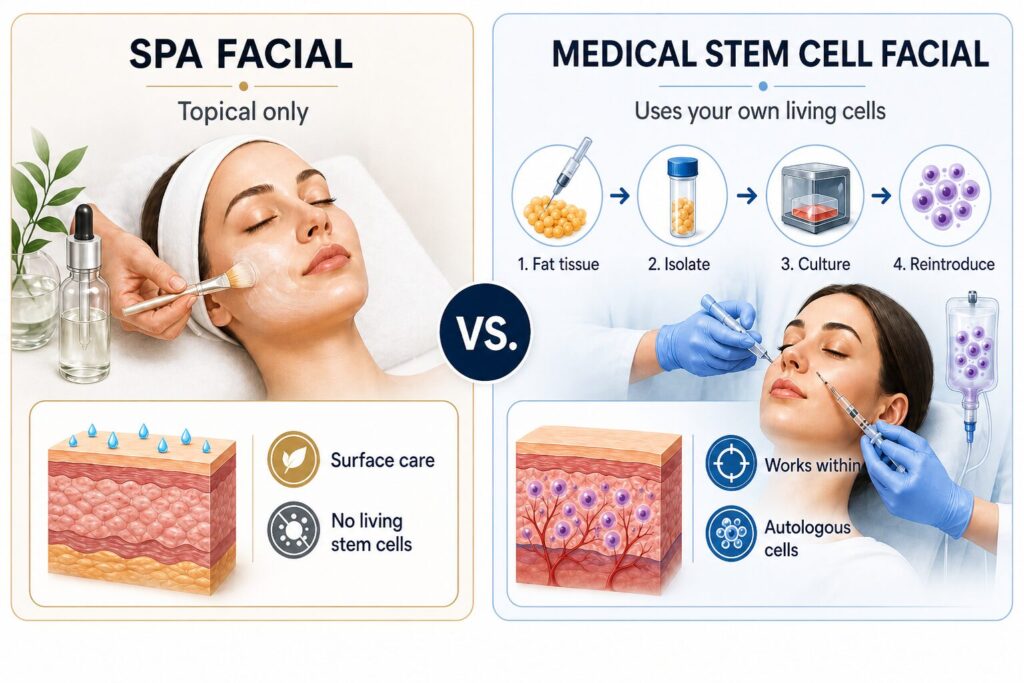
A medical-grade stem cell facial is fundamentally different. It involves harvesting a small amount of your own fat tissue, isolating the mesenchymal stem cells from it, expanding them in a certified laboratory over several weeks, and then reintroducing millions of those living cells into your face through targeted injections and intravenous infusion.
Why Creams, Fillers, and Botox Stop Working After 40 — and What Actually Lasts
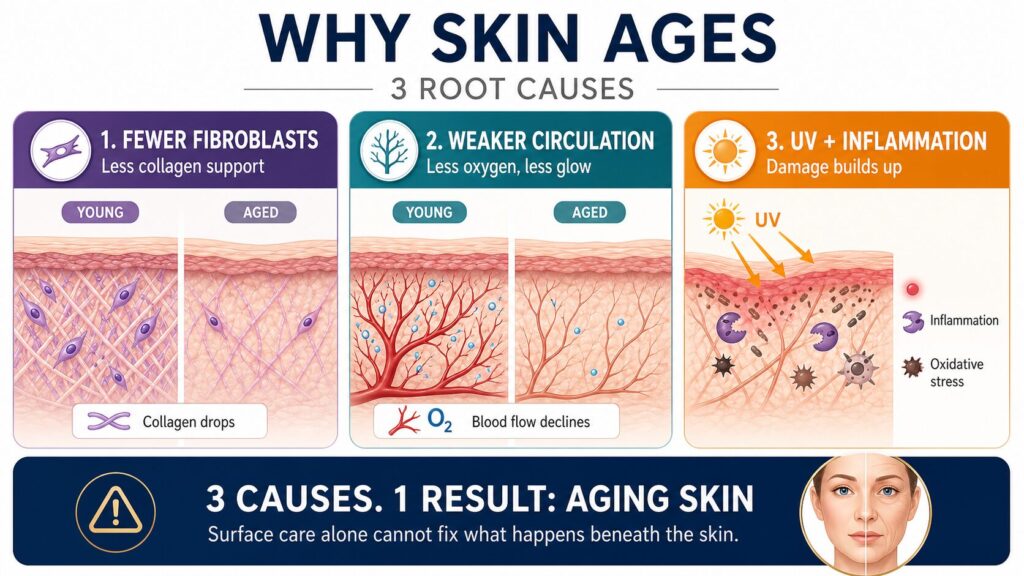
By age 50, your skin has lost about half of its collagen-producing fibroblasts, capillary density has
progressively declined, and decades of UV damage have triggered chronic inflammation. Creams cannot
replace lost cells. Fillers add volume but don’t restart collagen synthesis. Botox freezes muscles temporarily. None address the underlying biological collapse.
Fibroblast Decline — Your Collagen Factory Shuts Down
Fibroblasts are the cells that produce collagen and elastin — the structural proteins that keep skin firm and elastic. A landmark study published in Archives of Dermatology by Fisher and colleagues found that fibroblast density drops by roughly half between the ages of 20 and 50. In plain terms, your skin loses about half of its collagen-producing workforce by middle age. Once those cells are gone, no cream or serum can replace them.
Loss of Microcirculation — The Glow Disappears
Healthy skin depends on a dense network of capillaries that deliver oxygen and nutrients to the dermis. Research published in Microvascular Research showed that this microvascular network progressively deteriorates with age — meaning less oxygen reaches the skin, less waste is carried away, and the natural “glow” of youthful skin fades. This is why aged skin often looks dull and sallow regardless of what you apply to it.
Photoaging and Chronic Inflammation — UV Damage That Accumulates
Ultraviolet radiation does not just cause sunburn. It triggers a chronic inflammatory cascade that degrades collagen fibers, activates matrix metalloproteinases (MMPs) — enzymes that literally chew through your skin’s structural proteins — and generates oxidative stress that damages cellular DNA. This process, called photoaging, is responsible for up to 80% of visible facial aging signs, including wrinkles, dark spots, and loss of elasticity, according to a clinical study of 298 women published in Clinical, Cosmetic and Investigational Dermatology.
These three failures — fewer fibroblasts, weaker blood supply, chronic UV damage — are the real reasons your skin ages. And they explain why surface-level treatments eventually stop working.
How a Stem Cell Facial Works: Three Mechanisms of Rejuvenation
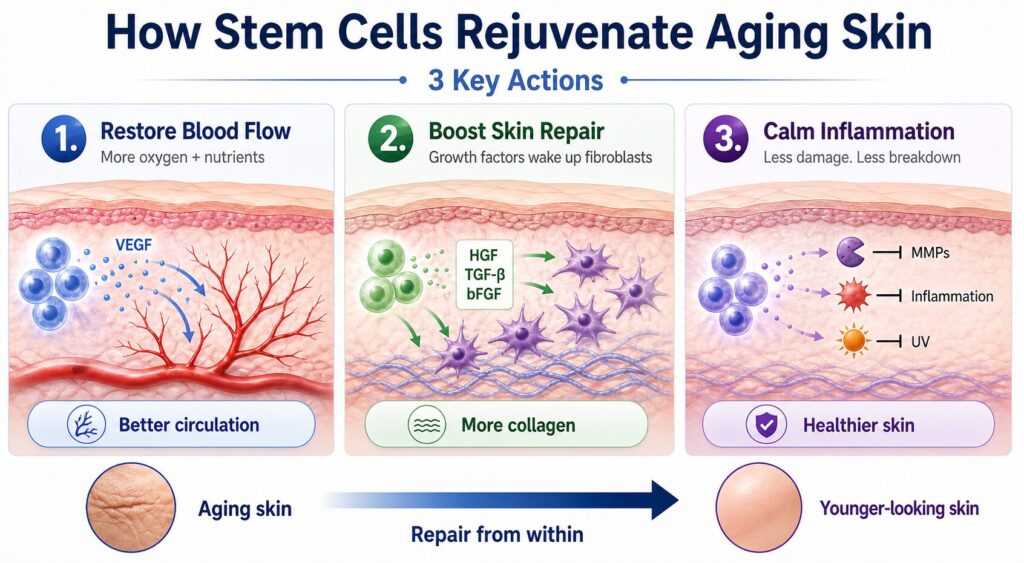
Adipose-derived stem cells regenerate aging skin through three documented pathways. First, angiogenesis:they secrete VEGF and rebuild capillary blood flow. Second, paracrine signaling: HGF, TGF-β, and bFGF reactivate dormant fibroblasts to produce new collagen. Third, anti-inflammatory repair: stem cells suppress MMP enzymes and neutralize UV-driven oxidative damage.
Angiogenesis — Rebuilding the Glow
ADSCs secrete vascular endothelial growth factor (VEGF) and other pro-angiogenic molecules. A foundational study published in Circulation — one of the world’s highest-impact medical journals — demonstrated that human adipose stromal cells secrete significant quantities of VEGF, driving the formation of new capillary networks. In everyday terms, the stem cells help rebuild the blood supply that aging has destroyed, bringing back the oxygen and nutrients your skin needs to look alive.
Paracrine Activation — Waking Up Dormant Cells
Stem cells do not just become new tissue. They communicate. ADSCs release a cocktail of growth factors — including hepatocyte growth factor (HGF), transforming growth factor-beta (TGF-β), and basic fibroblast growth factor (bFGF) — that reactivate the skin’s existing fibroblasts. Research published in Expert Opinion on Biological Therapy showed that ADSC-derived factors stimulate fibroblast proliferation, accelerate wound healing, and enhance collagen synthesis. Think of it this way: the stem cells act as a wake-up call for your skin’s own repair system, which has been slowing down with age.
Anti-Inflammatory Repair — Healing UV Damage
Chronic inflammation from years of UV exposure constantly degrades your skin’s collagen. ADSCs counteract this by suppressing MMP activity — the enzymes that break down collagen — and by neutralizing oxidative stress. A comprehensive review published in International Journal of Molecular Sciences documented how mesenchymal stem cells reduce skin inflammation, inhibit collagen-degrading enzymes, and protect against UV-induced cellular damage. The result is not just a cosmetic improvement — it is a genuine biological reversal of the damage that has accumulated over decades.
Stem Cell Facial vs. Fillers, Botox, PRP, and Lasers
A stem cell facial differs from a fillers, Botox, PRP, and laser resurfacing by working from
inside the dermis rather than reshaping or paralyzing the surface. Fillers add volume for 6–18 months. Botox lasts 3–4 months. A stem cell facial regenerates structural tissue — measured in years, not months.
| Factor | Stem Cell Facial | Dermal Fillers | Botox | PRP | Laser Resurfacing |
|---|---|---|---|---|---|
| Mechanism | Regenerates tissue from within | Adds volume externally | Paralyzes muscles | Platelet growth factors | Controlled skin damage → healing |
| Collagen Regeneration | Yes — new collagen production ✓ | No | No | Mild | Some |
| Duration of Results | Years (with maintenance) | 6–18 months | 3–4 months | 6–12 months | Variable |
| Blood Supply Restoration | Yes — angiogenesis ✓ | No | No | Minimal | Temporary |
| Uses Your Own Cells | Yes — autologous ✓ | No (synthetic) | No (botulinum toxin) | Yes (blood) | No |
| Downtime | Minimal (mild swelling 2–3 days) | Minimal | None | Minimal | Days to weeks |
This comparison is based on general treatment characteristics. Individual results vary. A stem cell facial is a medical procedure and requires physician evaluation.
The fundamental difference is this: fillers, Botox, and lasers work on the outside — adding volume, freezing muscles, or stimulating surface healing. A stem cell facial works from the inside, rebuilding the cellular infrastructure that produces youthful skin.
A 2025 split-face clinical trial published in the Journal of Cosmetic Dermatology compared adipose-derived stem cell exosomes with PRP and found that both treatments equally improved wrinkling, texture, and skin appearance, with histological confirmation of increased collagen and glycosaminoglycans. The study concluded that ASC-derived products offer a compelling alternative, particularly for patients who prefer to avoid phlebotomy.
A Non-Surgical Alternative to a Facelift
Because a stem cell facial rebuilds collagen, elastin, and capillary blood flow within the dermis rather than tightening tissue surgically, many patients consider it a non-surgical, regenerative alternative to a facelift — or a way to delay one. In the Menkes 2020 study, adipose-derived stem cell injection produced firmer, denser skin and a measurable lifting effect, alongside increased elastic and collagen fiber density. A stem cell facial does not reposition tissue the way surgery does and is not a substitute for a surgical facelift when significant skin laxity is present; results build gradually over months and vary by individual. But for those addressing early sagging and loss of firmness without surgery or downtime, it offers a biological, your-own-cells approach a scalpel cannot provide.
Individual suitability is determined during a medical consultation. This checklist is for general reference only.
Reach us directly — WhatsApp and email inquiries are free of charge.
Stem Cell Facial Benefits: Wrinkles, Texture, Glow — and What Research Confirms
Documented stem cell facial benefits include reduced wrinkle volume, depth, and area; increased dermal
cellularity; new elastic fiber formation; restored capillary density; and improved skin tone and luminosity. In published trials, deeper wrinkles improved most.
The Most Relevant Study for Our Protocol
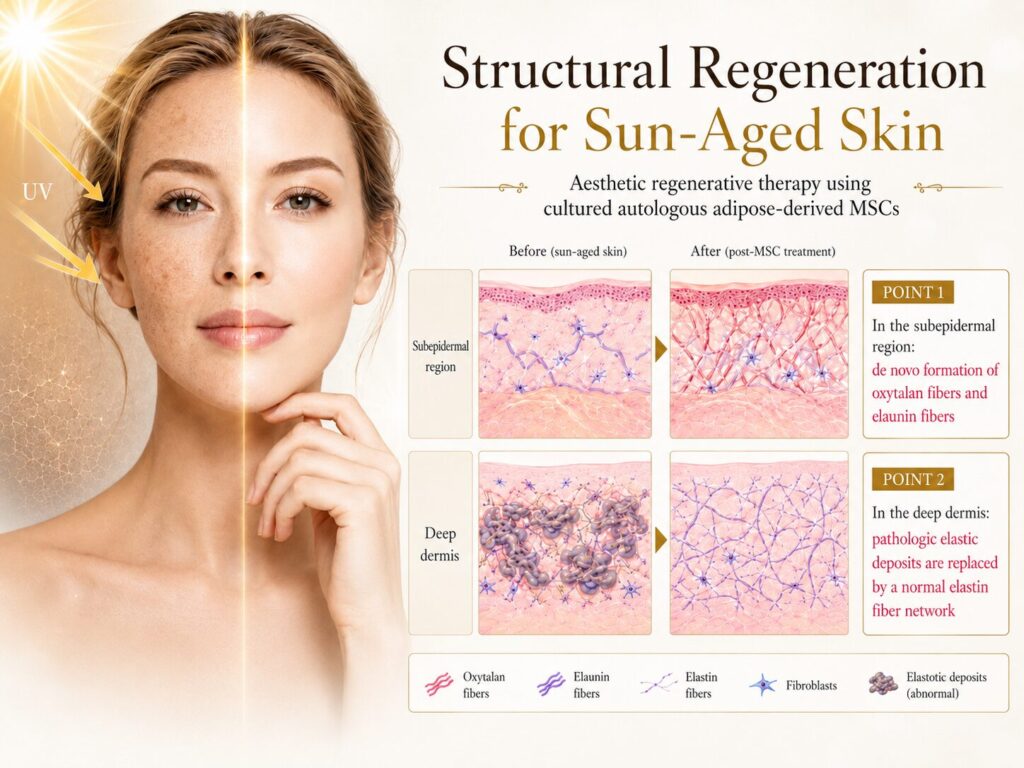
Charles-de-Sá et al. 2020 (Plastic and Reconstructive Surgery, DOI) is the closest published analogue to Cell Grand Clinic’s protocol: cultured (in vitro expanded) autologous adipose-derived mesenchymal stem cells, injected into the facial skin of patients before face-lift surgery. Skin biopsies retrieved during subsequent rhytidoplasty showed de novo formation of oxytalan and elaunin fibers in the subepidermal region, and substitution of pathologic elastotic deposits with a normal elastin fiber network in the deep dermis. The authors concluded that cultured autologous adipose mesenchymal stem cells are “appropriate, competent, and sufficient to elicit the full structural regeneration of the sun-aged skin” in their study population. This is histological evidence — not subjective rating.
Strong Supporting Evidence: Menkes 2020
A 2020 prospective study of 50 patients (Menkes et al., Plast Reconstr Surg Glob Open, DOI) injected adipose-derived stem cell-rich nanofat into the facial subcutaneous layer and tracked outcomes for an average of nine months. All 50 patients reported visible improvement in skin quality. Biopsies before and after treatment showed increased dermal cellularity, increased vascular density, and increased density of both elastic fibers and collagen fibers. A lifting effect was also observed.
Important modality note: Menkes 2020 used nanofat — a preparation that is rich in adipose-derived stem cells but is not identical to a culture-expanded ADSC protocol. Culture-expanded protocols (such as Cell Grand Clinic’s) grow cells over several weeks to reach up to 200 million cells, whereas nanofat relies on the stem cells naturally present in processed fat tissue. The underlying regenerative mechanisms — angiogenesis, paracrine signaling, collagen synthesis — overlap, but culture-expanded protocols deliver a substantially higher and more controlled cell dose.
Why Japan — and Why Cell Grand Clinic?
Japan is among the few countries with a dedicated national legal framework for regenerative medicine. The Act on the Safety of Regenerative Medicine, enacted in 2014, requires every clinic offering stem cell treatments to submit treatment plans to government-certified review committees and file a notification under the framework with the Ministry of Health, Labour and Welfare (MHLW) before patient administration. This is a notification and committee-review framework — distinct from US-FDA-style efficacy approval — but provides documented government oversight of every cultured-cell protocol.
Many regenerative medicine providers in Southeast Asia, Central America, and Eastern Europe operate under different regulatory environments — lower prices may reflect different oversight standards.
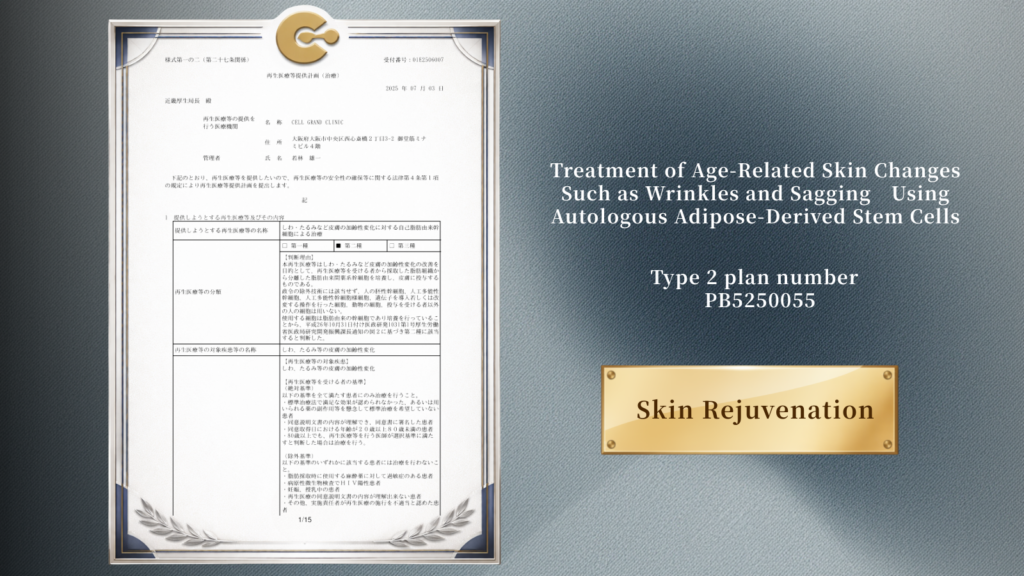
Cell Grand Clinic has filed 12 Type II Regenerative Medicine Provision Plans under this framework (Type II is the higher-tier risk classification within the Act, applicable to treatments using cultured autologous cells).
What Is a “Grand Stem Cell”?
Cell Grand Clinic defines a “Grand Stem Cell” as a cell that passes all four of the clinic’s quality benchmarks. Every treatment uses only cells that meet this standard.
| Quality Standard | What It Means | Why It Matters |
|---|---|---|
| ① Made-to-Order | Culture begins only after treatment is confirmed. ~7 weeks of individual cultivation. | No pre-made or stockpiled cells. Every batch is fresh and personalized. |
| ② ISCT-Verified | Surface antigen testing per International Society for Cell & Gene Therapy standards. | Scientifically confirms the cells are genuine mesenchymal stem cells. Cells that fail are discarded. |
| ③ Viability ≥ 95% | Cell viability is verified at ≥ 95% immediately before administration. | Dead or weakened cells cannot regenerate tissue. Only living, healthy cells are delivered. |
| ④ Passage ≤ 3 | Cells are expanded within 3 passages, reaching up to 200 million. | Limits cellular aging. Over-passaged cells lose regenerative potency and may pose safety risks. |
Every patient receives a Certificate of Quality documenting that their cells met all four Grand Stem Cell standards.
The clinic is led by Dr. Wakabayashi, a physician trained at the U.S. National Institutes of Health (NIH) and certified by the American Board of Regenerative Medicine (ABRM). Cell Grand Clinic also maintains an academic collaboration with Professor Ochiya, a leading researcher in exosome biology.
Skin renewal from within — beyond topicals and lasers.
Stem cell therapy — from $19,800 USD per session
$19,800 USD includes:
- 100 million autologous ADSCs
- 7-week culture at MHLW-certified CPC · passage ≤3
- Quality certificate · 95%+ viability
- 1 / 3 / 6 month remote follow-up
Final pricing depends on your individual case:
- Higher cell counts (200 million+)
- Combination protocols
- Multiple sessions
Have Dr. Wakabayashi review your case.
Share your medical history and current treatments. Dr. Wakabayashi reviews each international inquiry and responds with a written feasibility note, recommended protocol, and quote. Typical turnaround: 1–3 business days.
The Cell Grand Clinic Protocol: Stem Cell Injection + IV with 200M of Your Own Cells
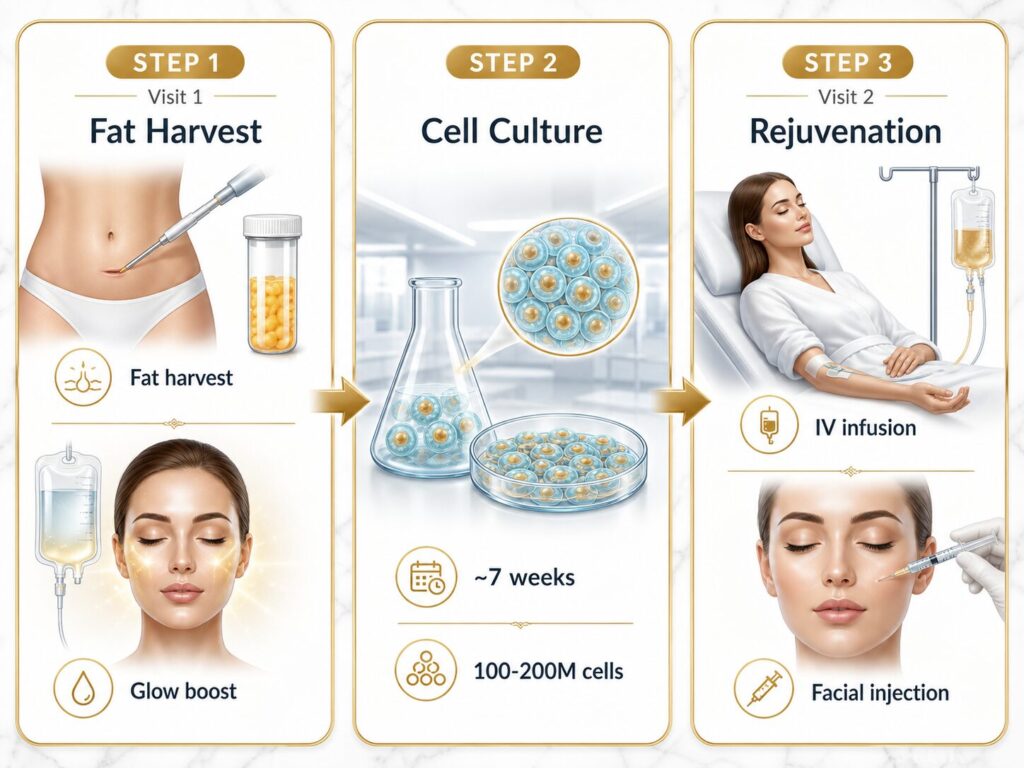
Every Grand Stem Cell batch is cultured for one patient and one patient only. No pooling. No reuse. After 7 weeks of dedicated culture, up to 200 million cells are administered — and any unused cells are destroyed, never transferred.”
Dual-Route Protocol — IV + Facial Injection
Cell Grand Clinic delivers stem cells through two routes simultaneously:
The IV route delivers stem cells systemically — they travel through the bloodstream to support overall tissue repair. The facial injection places cells directly into the dermal layer where they are needed most. This combined approach ensures both local structural regeneration and systemic anti-inflammatory support.
Note: On the very same day as your fat collection, you also have the option to receive exosome therapy. Culturing your own stem cells takes several weeks, and many patients don’t want to simply wait while their symptoms continue. Exosomes—the tiny signaling messengers naturally released by stem cells—can help calm inflammation and ease discomfort during this period, so you’re already starting to feel better by the time your cultured cells are ready.
For patients interested in the systemic anti-aging benefits of IV stem cell therapy beyond facial rejuvenation, see our article on IV stem cell therapy for anti-aging.
Reverse Aging: How Stem Cell IV Therapy Actually Works Learn How Exosome Therapy: Same-Day, Cell-Free Regeneration Learn MoreStem Cell Facial Before and After: Results Timeline and What to Expect
Stem cell facial results unfold over months, not minutes. Within 2–4 weeks, skin hydration, tone, and
luminosity begin shifting as new capillaries form. By 3–6 months, wrinkle depth and elasticity improve as
fresh collagen matures. Full regenerative effects develop over 1–3 years, with optional annual maintenance to sustain results.
| Timeline | What Happens |
|---|---|
| Treatment day | Mild swelling and redness at injection sites. Most patients resume normal activities within 2–3 days. |
| 2–4 weeks | Initial improvements in skin hydration, tone, and luminosity as new blood vessels form. |
| 3–6 months | Visible improvement in wrinkle depth, skin elasticity, and overall texture as new collagen matures. |
| 1–3 years | Full regenerative effects. Skin structure continues to benefit from the new cellular infrastructure. |
| Annual maintenance | Optional booster treatments to sustain results. Maintenance intervals vary by individual. |
Target areas include the face, neck, décolletage, and hands. The IV component also provides systemic benefits throughout the body — supporting cellular health beyond the treatment area.
Stem Cell Therapy in Japan: Plans, Pricing & What to Expect Read Guide AGA & FAGA: A Regenerative Approach to Hair Loss Learn MoreFrequently Asked Questions
What is a stem cell facial?
A stem cell facial is a regenerative medical procedure that uses a patient’s own adipose-derived stem cells to support skin renewal from within. Unlike spa treatments that apply plant-based extracts topically, a medical-grade stem cell facial — such as the one offered at Cell Grand Clinic in Japan — involves harvesting fat tissue, culturing up to 200 million living stem cells over seven weeks, and reintroducing them through targeted facial injection and IV infusion. The cells aim to support collagen production, blood flow, and recovery from UV damage at the cellular level.
Are there stem cell facial side effects?
Because the procedure uses your own cells (autologous), there is no risk of allogeneic immune rejection or allergic reaction. Common side effects are limited to mild swelling, redness, and bruising at injection sites, which typically resolve within 2–3 days. No serious adverse events have been reported in the published clinical trials we reference (e.g., Menkes 2020, Charles-de-Sá 2020, Akbari 2023). Cell Grand Clinic performs all procedures under documented MHLW notification protocols with continuous medical monitoring.
How much does a stem cell facelift cost?
The cost of stem cell facial rejuvenation varies by treatment plan, the number of cells required, and whether it is combined with other regenerative therapies. In Japan, costs reflect the multi-week cell culture process, laboratory quality control, and physician expertise involved. Cell Grand Clinic provides personalized cost estimates after an initial medical assessment — contact us via WhatsApp or email for details.
How long do stem cell facial results last?
Most patients observe initial improvements within 2–4 weeks and significant visible changes at 3–6 months. Because the treatment aims to support new collagen and blood vessel formation, results in published reports can last 1–3+ years depending on individual factors such as age, lifestyle, and sun exposure. Annual maintenance treatments can help sustain results over time.
Is a stem cell facial better than PRP?
Both treatments use the patient’s own biological material, but they work differently. PRP relies on platelet-derived growth factors from your blood, while a stem cell facial delivers living mesenchymal stem cells (or in some studies, stem cell-derived exosomes) with a broader range of regenerative functions — including angiogenesis support and paracrine signaling. A 2025 split-face non-inferiority trial (Estupiñan et al.) found that ASC-derived exosomes and PRP produced comparable improvements in wrinkle reduction and collagen synthesis. Cultured stem cell injection — distinct from exosome or PRP approaches — aims to provide a longer-lasting biological foundation, though direct head-to-head comparisons are limited.
Can I combine a stem cell facial with other treatments?
Yes. Stem cell facial therapy can be combined with PRP, laser resurfacing (CO₂), microneedling, or surgical facelift procedures. A 2024 study (delaO-Escamilla et al.) showed that combining ADSC with CO₂ laser produced superior elastin and epidermal thickness improvements compared to ADSC with microneedling. Many patients at Cell Grand Clinic combine facial stem cell injection with IV stem cell infusion for both local skin support and systemic regenerative effects. Your physician will design a treatment plan tailored to your goals and condition.
What makes Cell Grand Clinic different?
Three factors distinguish Cell Grand Clinic: cell quality (every batch meets the four-point “Grand Stem Cell” standard — ISCT-verified, ≥95% viability, passage ≤3, and made-to-order); cell quantity (up to 200 million cells per treatment); and regulatory rigor (12 Type II Regenerative Medicine Provision Plans filed under Japan’s dedicated regenerative medicine law). Every patient receives a Certificate of Quality documenting that their cells met all standards.
Is a stem cell facial a non-surgical facelift?
Not exactly. A surgical facelift physically lifts and repositions skin and underlying tissue, while a stem cell facial works biologically — using your own cultured adipose-derived stem cells to rebuild collagen, elastin, and blood supply within the dermis. Published studies (e.g., Menkes 2020) have reported a lifting effect and firmer skin after adipose-derived stem cell injection, so it can serve as a non-surgical, regenerative alternative for early sagging and loss of firmness. It is not a replacement for surgery when significant skin laxity is present, and results develop gradually over months and vary by individual.
What is a stem cell facelift?
“Stem cell facelift” is an informal term for a regenerative facial procedure that uses stem cells rather than a surgical lift. At Cell Grand Clinic it refers to our cultured stem cell facial: up to 200 million of your own adipose-derived stem cells, delivered by facial injection plus IV infusion, to support collagen production, capillary regeneration, and skin firmness from within. Unlike a surgical facelift, there is no incision or tissue repositioning; unlike fillers or Botox, it aims to regenerate the skin’s own structure rather than mask the surface. Results build over months and vary by individual.
Regenerate, Don’t Decorate
Fillers add volume. Botox freezes muscles. Lasers damage skin to trigger healing. These treatments work — but they work on the surface. They do not fix the underlying reason your skin is aging.
A stem cell facial is different. It restores the biological machinery that keeps skin young: fibroblasts, blood vessels, and the body’s own repair signaling. It is not a quick fix. It is a regenerative investment in how your skin will look and feel for years to come.
If you are ready to move beyond decorating the surface and start regenerating from within, we are here to answer your questions.
References
- Fisher GJ, Varani J, Voorhees JJ. Looking older: fibroblast collapse and therapeutic implications. Arch Dermatol. 2008;144(5):666-672. DOI
- Bentov I, Reed MJ. The effect of aging on the cutaneous microvasculature. Microvasc Res. 2015;100:25-31. DOI
- Flament F, Bazin R, Laquieze S, et al. Effect of the sun on visible clinical signs of aging in Caucasian skin. Clin Cosmet Investig Dermatol. 2013;6:221-232. DOI
- Jo H, Brito S, Kwak BM, Park S, Lee MG, Bin BH. Applications of mesenchymal stem cells in skin regeneration and rejuvenation. Int J Mol Sci. 2021;22(5):2410. DOI
- Rehman J, Traktuev D, Li J, et al. Secretion of angiogenic and antiapoptotic factors by human adipose stromal cells. Circulation. 2004;109(10):1292-1298. DOI
- Kim WS, Park BS, Sung JH. The wound-healing and antioxidant effects of adipose-derived stem cells. Expert Opin Biol Ther. 2009;9(7):879-887. DOI
- Charles-de-Sá L, Gontijo-de-Amorim NF, Rigotti G, et al. Photoaged skin therapy with adipose-derived stem cells. Plast Reconstr Surg. 2020;145(6):1037e-1049e. DOI
- Menkes S, Luca M, Soldati G, Polla L. Subcutaneous injections of nanofat adipose-derived stem cell grafting in facial rejuvenation. Plast Reconstr Surg Glob Open. 2020;8(1):e2550. DOI
- Akbari F, Hadibarhaghtalab M, Parvar SY, Dehghani S, Namazi MR. Toward facial rejuvenation; A clinical trial to assess the efficacy of nano fat grafting on wrinkles. J Cosmet Dermatol. 2023;23(2):600-606. DOI
- Estupiñan B, Ly K, Goldberg DJ. Adipose mesenchymal stem cell-derived exosomes versus platelet-rich plasma treatment for photoaged facial skin: an investigator-blinded, split-face, non-inferiority trial. J Cosmet Dermatol. 2025;24(5):e70208. DOI
Updated: 2026.09.22