


 邮件咨询
邮件咨询 微信预约
微信预约

在34项随机对照试验中,接受干细胞(间充质干细胞,MSC)治疗的患者实现血糖控制显著改善的可能性约为安慰剂的3倍(比值比2.79)。干细胞疗法帮助再生分泌胰岛素的β细胞、缓解胰岛素抵抗、修复糖尿病并发症——适合药量不断攀升、而神经病变、肾病或足溃疡仍在进展的患者。
在日本大阪的Cell Grand Clinic,这些证据在日本厚生劳动省(MHLW)监管的再生医疗框架下落地:经静脉输注最多2亿个您自己的(自体)脂肪来源干细胞——由您自身的少量脂肪组织培养约7周而来。绝不使用供体细胞。
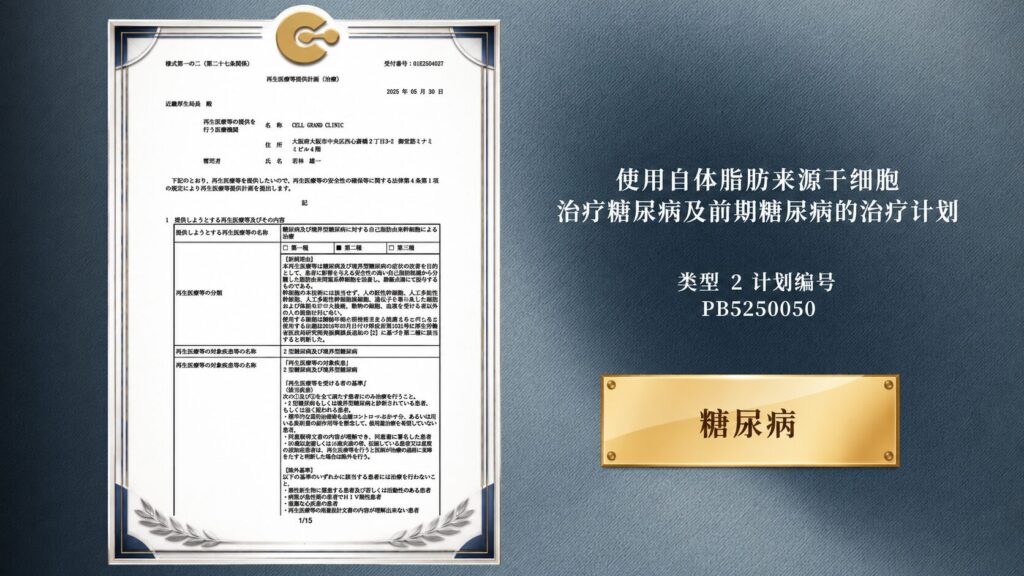
MHLW第二类备案。NIH受训医师。3,000+例干细胞治疗。糖尿病计划编号PB5250050。
数字为已发表试验的总结(见参考文献)。个体结果各异;干细胞疗法不是有保证的治愈方法。

什么是糖尿病干细胞疗法?
糖尿病干细胞疗法 是一种再生医疗手段,使用间充质干细胞再生分泌胰岛素的β细胞、逆转胰岛素抵抗,并修复包括神经病变、肾病和视网膜病变在内的糖尿病并发症。2025年一项纳入34项随机对照试验的荟萃分析发现,干细胞疗法在改善血糖控制方面的有效性是安慰剂的2.79倍(OR 2.79,95% CI 1.63–4.75)。
干细胞疗法不是幻想——它是经过数百项同行评审研究打磨的临床现实。而在日本,它受到监管、可以获得,并且对1型、2型糖尿病及常规医学无法修复的糖尿病并发症的疗效证据日益充分。
为什么常规治疗会撞上瓶颈
胰岛素和口服药物能控制血糖,但不能再生已经衰竭的β细胞、
逆转胰岛素抵抗,也不能修复驱动长期并发症的微血管损伤。
超过50%的长期糖尿病患者会出现神经病变、肾病、视网膜病变或
心血管疾病——这些结局是仅靠药物无法预防或逆转的。
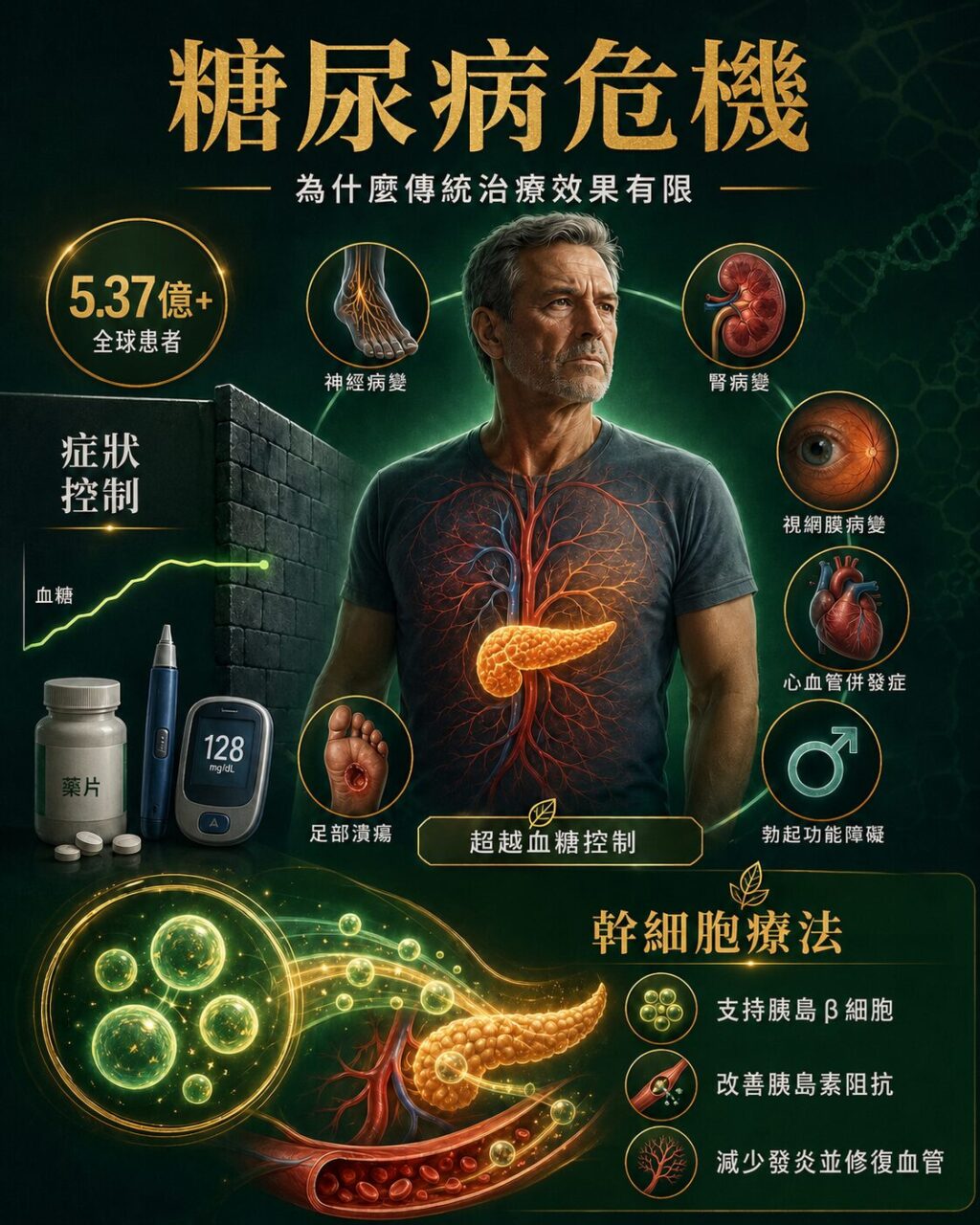
您按时服药、监测血糖、遵循每一条建议——但神经病变仍在蔓延,药量仍在攀升,透析或激光治疗开始进入话题。全球有超过5.37亿人患有糖尿病,而现行策略处理的是症状(高血糖),不是经年累积的β细胞丧失、胰岛素抵抗和组织损伤这些根本问题。
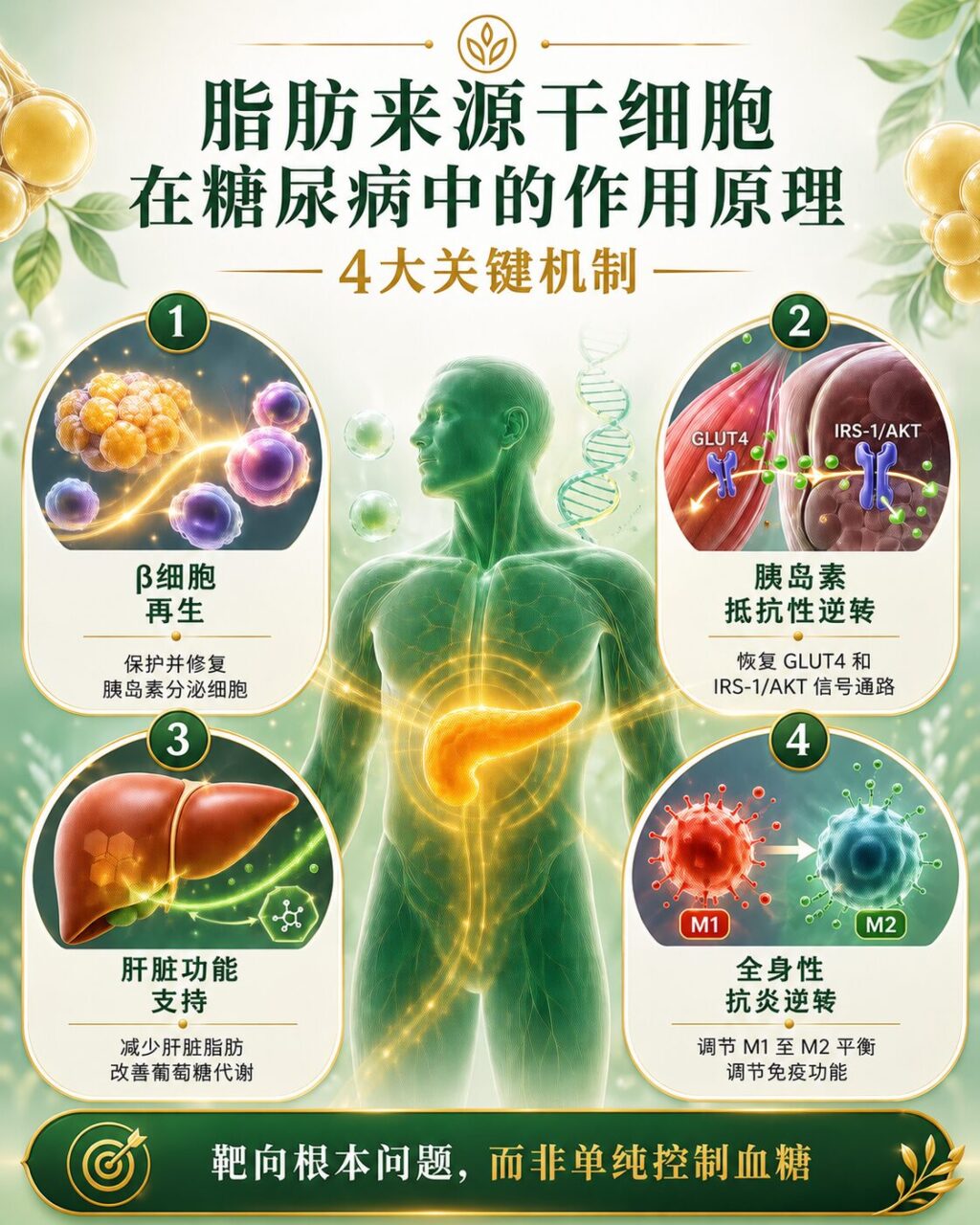
脂肪来源干细胞如何治疗糖尿病
脂肪来源干细胞(ADSC)通过四个机制发挥作用:释放保护并再生胰腺β细胞的生长因子;
恢复GLUT4和IRS-1/AKT胰岛素信号通路;
通过M1向M2巨噬细胞转化抑制慢性炎症;
并改善肝脏葡萄糖代谢。这种全身性作用针对的是疾病本身,
而不仅仅是症状。
β细胞再生与保护
干细胞释放生长因子——包括VEGF、TGF-β、IGF-1和HGF——刺激胰腺β细胞再生,并保护现有β细胞免受进一步破坏。它们减少氧化应激,抑制炎症性细胞死亡通路。
特别是对1型糖尿病,ADSC能调节破坏β细胞的失控自身免疫反应——处理其免疫学根源,而非仅仅代偿其下游后果。对2型糖尿病,重点则转向再生因多年超负荷而衰竭的β细胞。
在细胞层面逆转胰岛素抵抗
ADSC疗法增加GLUT4表达——即肝脏、肌肉和脂肪组织中胰岛素借以将葡萄糖送入细胞的葡萄糖转运蛋白。它恢复IRS-1/AKT信号通路——胰岛素与靶组织沟通的主要分子路径。它抑制NLRP3炎性小体——阻断胰岛素信号的关键炎症触发器。
这不是通过单一通路对胰岛素敏感性的小幅改善。这是对让胰岛素正常工作的细胞机器的修复——正是多年的胰岛素抵抗逐步破坏的那套机器。
肝功能恢复
肝脏在血糖调节中扮演核心角色,肝功能障碍是糖尿病空腹和餐后血糖升高的重要因素。ADSC疗法改善肝功能指标、减少肝脏脂肪堆积、促进糖原合成——通过口服药物无法触及的路径直接改善葡萄糖代谢。
全身抗炎重置
慢性低度炎症如今被认为是1型和2型糖尿病共同的主要驱动因素,而不仅仅是其后果。ADSC将促炎的M1巨噬细胞转化为抗炎的M2巨噬细胞,扩增调节性T细胞以维持免疫平衡,并将全身细胞因子谱从破坏性转向保护性。
没有任何单一药物能实现这种广度的抗炎作用。这是一次系统级的重置——也是ADSC疗法同时应对糖尿病并发症的同一机制。
1型 vs 2型糖尿病干细胞治疗:哪种反应更好?
干细胞治疗通过不同机制对1型和2型糖尿病均有效。
在1型中,干细胞抑制破坏β细胞的自身免疫攻击;在2型中,它们逆转
胰岛素抵抗并再生衰竭的β细胞。
| 对比因素 | 1型糖尿病 | 2型糖尿病 |
|---|---|---|
| 根本原因 | β细胞遭自身免疫破坏 | 胰岛素抵抗+β细胞衰竭 |
| 干细胞的主要作用 | 免疫调节——平息自身免疫攻击,保护剩余β细胞 | 代谢修复——缓解胰岛素抵抗,支持衰竭的β细胞 |
| 临床证据 | 新诊断患者RCT:较对照组HbA1c与C肽更优;胰岛素分泌得以保留(Hu 2013,n=29;ProTrans RCT 2023) | 更强:n=91双盲RCT中HbA1c −1.31%;13项RCT汇总12个月时−0.72 |
| 最佳时机 | 诊断后1–2年内(β细胞尚存时) | 任何阶段——越早反应往往越好 |
| 可治疗的并发症 | 神经病变、肾病、视网膜病变 | 全部范围,含足溃疡、ED、心血管 |
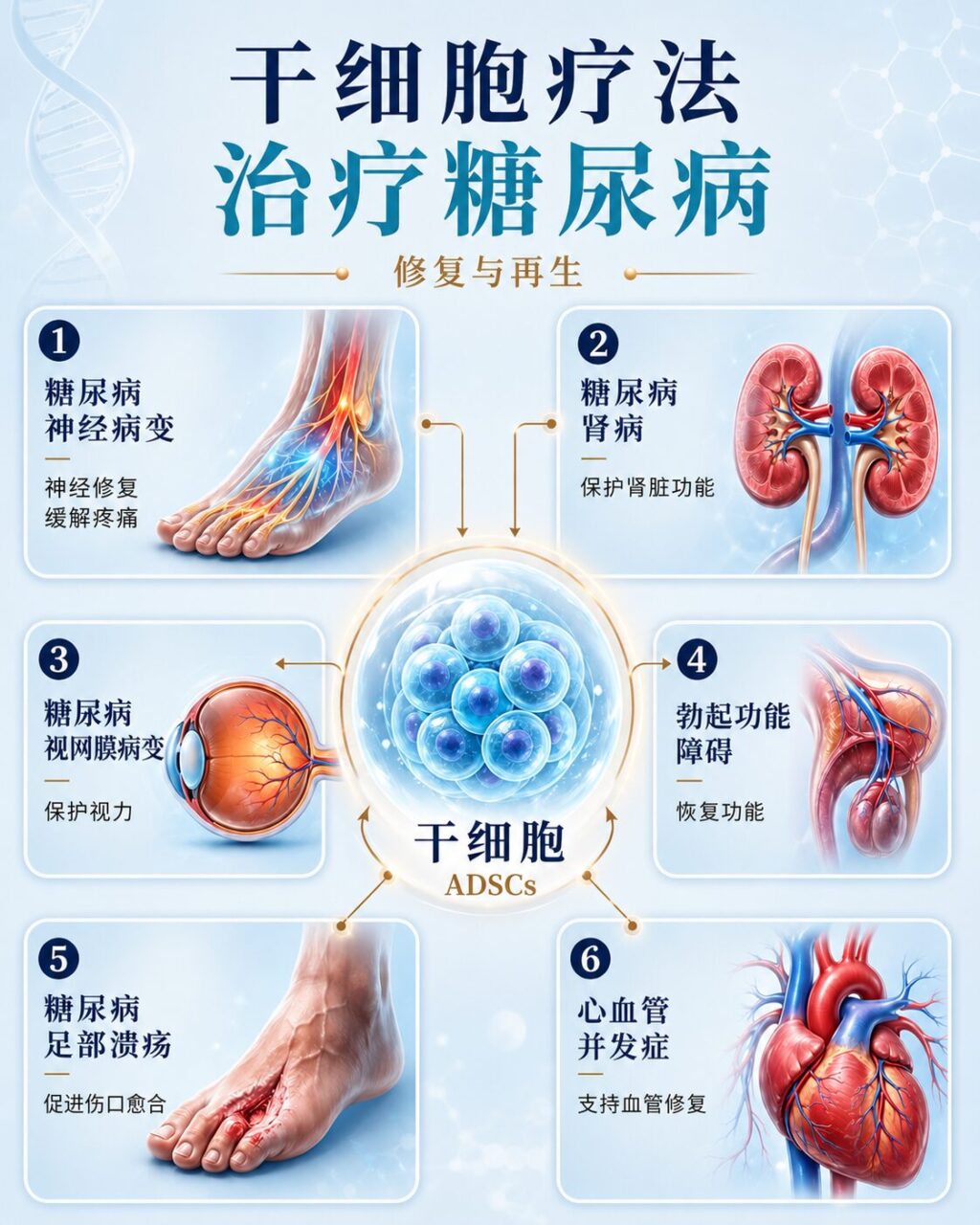
超越血糖:用干细胞治疗糖尿病并发症
干细胞疗法直接针对药物治疗无法应对的糖尿病并发症:
神经病变、肾病、视网膜病变、足溃疡、勃起功能障碍和心血管
疾病。通过恢复微循环、再生神经、减轻炎症,ADSC
疗法作用于底层的组织损伤——保住常规治疗只能延缓恶化的
肢体、视力和肾功能。
糖尿病神经病变
随着干细胞再生神经末梢、恢复血流,神经性疼痛逐渐减轻。许多患者报告在3–6个月内感觉改善、肢体转暖、麻木减少。
糖尿病肾病
随着干细胞减轻肾小球炎症、促进足细胞修复,肾功能趋于稳定。在一项随机试验(NEPHSTROM, 2023)中,MSC疗法较安慰剂减缓了进展性糖尿病肾病2型患者的肾功能(eGFR)下降速度。
糖尿病视网膜病变
通过恢复视网膜血流和减轻炎症,视力和视网膜健康得到改善。
糖尿病足溃疡
通过组织再生和新血管形成增强创面愈合——直接应对导致截肢的病变。 糖尿病足溃疡是非创伤性下肢截肢的首要原因——而这正是再生医疗正在证明有能力阻断的生物学路径。
勃起功能障碍
改善微循环和神经功能可恢复自然功能——这是PDE5抑制剂(如伟哥)只能暂时模拟的结果。其机制和临床证据在我们的专栏中有深入介绍:勃起功能障碍的干细胞疗法。
心血管并发症
改善内皮功能、减轻血管炎症——这是糖尿病患者最常见的死亡原因。由于动脉疾病背后是同样的血管生物学,干细胞疗法也能支持逆转动脉斑块与治疗动脉粥样硬化。
相关指南:神经损伤是患者咨询最多的并发症——请参阅我们的专题文章:神经病变能否逆转以及神经修复的思路。
直接联系我们——微信和邮件咨询免费。
糖尿病干细胞疗法:成功率与临床证据
糖尿病干细胞疗法在改善血糖控制方面的成功率约为安慰剂的3倍。2025年纳入34项随机对照试验的荟萃分析(Li et al., Stem Cell Research & Therapy)报告比值比为2.79(95% CI 1.63–4.75)——接受干细胞治疗的患者实现显著改善的可能性接近3倍。2025年的多项独立综述得出相同方向的结论,包括一项政府委托的20项RCT(778名患者)系统综述,以及一项13项RCT的荟萃分析(12个月时HbA1c和胰岛素需求均更低)。
| 焦点 | 研究类型(规模) | 主要发现 |
|---|---|---|
| 整体血糖控制 | 荟萃分析(34项RCT) | OR 2.79——改善血糖控制的可能性约3倍(Li 2025) |
| 2型——双盲RCT | RCT(n=91) | HbA1c −1.31%;达标率20% vs 安慰剂4.55%(Zang 2022) |
| 2型——汇总RCT | 荟萃分析(13项RCT,507名患者) | HbA1c −0.72(P=0.0003);12个月时胰岛素−14.5单位/日(2025) |
| 1型——新诊断 | RCT(n=29)+双盲RCT | 较对照组HbA1c与C肽更优,持续约21个月;胰岛素分泌得以保留(Hu 2013;ProTrans 2023) |
| 糖尿病肾病 | RCT(NEPHSTROM) | 较安慰剂eGFR下降更慢(2023) |
| 糖尿病足溃疡 | 系统综述 | 愈合可能性高约56%(RR 1.56) |
最强的随机证据多使用脐带/华通氏胶MSC。这些证据在总体上支持MSC路径;Cell Grand Clinic使用自体脂肪来源MSC(您自己的细胞)。个体结果各异。
2型糖尿病干细胞治疗成功率
2型糖尿病的证据最为充分。在一项91名成人的单中心、双盲、安慰剂对照RCT中,脐带MSC治疗使HbA1c降低1.31个百分点(从约9.0%降至约7.5%),20%的治疗组患者达到复合目标(HbA1c <7%且胰岛素减量≥50%),而安慰剂组仅4.55%(Zang et al., 2022)。汇总13项RCT,MSC治疗在12个月时使HbA1c降低0.72个点、每日胰岛素减少约14.5单位(2025年荟萃分析)。大多数2型患者在医生监督下于3–6个月内出现可测量的HbA1c下降;结果取决于病程和剩余β细胞功能。
1型糖尿病干细胞治疗成功率
1型糖尿病的随机证据已超越早期试点。在一项29名新诊断1型糖尿病患者的随机试验中,华通氏胶MSC治疗较单纯标准胰岛素治疗产生显著更优的HbA1c和C肽,获益持续约21个月(Hu et al., 2013)。随后的双盲安慰剂对照试验(ProTrans, 2023)发现,异体MSC治疗帮助新发患者保留了自身的胰岛素分泌能力(C肽)。另外,2025年一项异体干细胞来源胰岛疗法(zimislecel)在1–2期试验(NEJM)中实现了胰岛素独立——这是重大进展,但它是另一种治疗方式(移植分化胰岛细胞+免疫抑制),不是本文所述的静脉自体ADSC疗法。
1型的最佳窗口是诊断后1–2年内,此时功能性β细胞尚存。干细胞疗法不是1型糖尿病的有保证治愈方法。
2026年最新动态:Zimislecel(VX-880)、胰岛细胞疗法及其对患者的意义
过去两年,糖尿病干细胞研究进展迅速,有必要精确理解每条头条新闻的含义。Zimislecel(原VX-880)是Vertex制药为1型糖尿病开发的异体干细胞来源胰岛细胞疗法——一种胰岛细胞移植。在其发表于新英格兰医学杂志(2025)的1–2期试验部分中,接受全剂量的12名参与者全部恢复了可测量的胰岛功能,其中10人(83%)在一年时不再需要注射胰岛素。Zimislecel经门静脉输注,需要终身免疫抑制;最常见的严重不良事件是中性粒细胞减少。3期项目正在进行中,Vertex表示计划于2026年提交监管申请。截至本次更新,zimislecel仅在临床试验内可用。
对2型糖尿病,一个被广泛报道的上海单例病例(Cell Discovery, 2024)使用由患者自身重编程内胚层干细胞培育的胰岛组织,患者随后实现了胰岛素独立。这是令人鼓舞的概念验证——但它仍是研究阶段的单一病例,尚未在任何地方获批。
这与本页所述疗法有何不同?Zimislecel等胰岛替代路径旨在重建胰岛素分泌本身,目前需要在临床试验内进行移植和免疫抑制。在日本开展的自体脂肪来源干细胞(ADSC)疗法是另一种方式:您自己的细胞、经静脉给药,旨在改善代谢环境、支持并发症管理——无需免疫抑制,也不宣称治愈。患者每周都会问起这些头条;诚实的回答是:胰岛替代确实前景可期但尚不可及,而ADSC疗法如今就可以在日本再生医疗框架下获得,其目标是上文所述的、更为务实的循证目标。
干细胞疗法适合您的糖尿病吗?
如果您有药物控制不佳的2型糖尿病、神经病变或肾病等糖尿病并发症、
标准护理无效的足溃疡、或新诊断(1–2年内)的1型糖尿病,
您可能从干细胞疗法中获益。活动性感染、现患
癌症和严重器官衰竭仍是绝对禁忌。
- 药物未能完全控制的2型糖尿病
- 糖尿病神经病变(麻木、刺痛、疼痛)
- 早期糖尿病肾病(eGFR下降)
- 标准创面护理无效的足溃疡
- 糖尿病性勃起功能障碍
- 新发1型糖尿病(1–2年内)
- 活动性感染或败血症
- 近期或现患癌症
- 严重器官衰竭(终末期肾或肝)
- 无法坚持随访监测
在哪里可以接受糖尿病干细胞治疗?为什么选日本?
糖尿病干细胞治疗在日本、墨西哥、泰国、德国和巴拿马等地都有提供——但监管严格程度天差地别。日本是唯一拥有专门国家法律的国家:《再生医疗安全性确保法》(2014年)要求每项治疗都有政府备案的方案、MHLW备案的细胞加工,以及持续的安全监测。对权衡治疗地点的国际患者而言,这层监管正是”可核实的方案”与”无人监督的方案”之间的区别。
| 对比因素 | 🇯🇵 日本 | 🇲🇽 墨西哥 | 🇹🇭 泰国 | 🇩🇪 德国 |
|---|---|---|---|---|
| 干细胞专门立法 | 有(2014年) | 无 | 无 | 部分 |
| 政府委员会审查 | 强制 | 无 | 无 | 不一 |
| 持牌GMP细胞加工 | 强制 | 不一 | 不一 | 有 |
| 国家不良事件登记 | 强制 | 无 | 无 | 部分 |
在Cell Grand Clinic(大阪),每一例糖尿病治疗都在MHLW备案提供计划编号PB5250050下进行,使用自体(您自己的)脂肪来源干细胞——无供体细胞,无排斥风险。
为什么选择Cell Grand Clinic治疗糖尿病
细胞质量:新鲜、纯净、年轻。
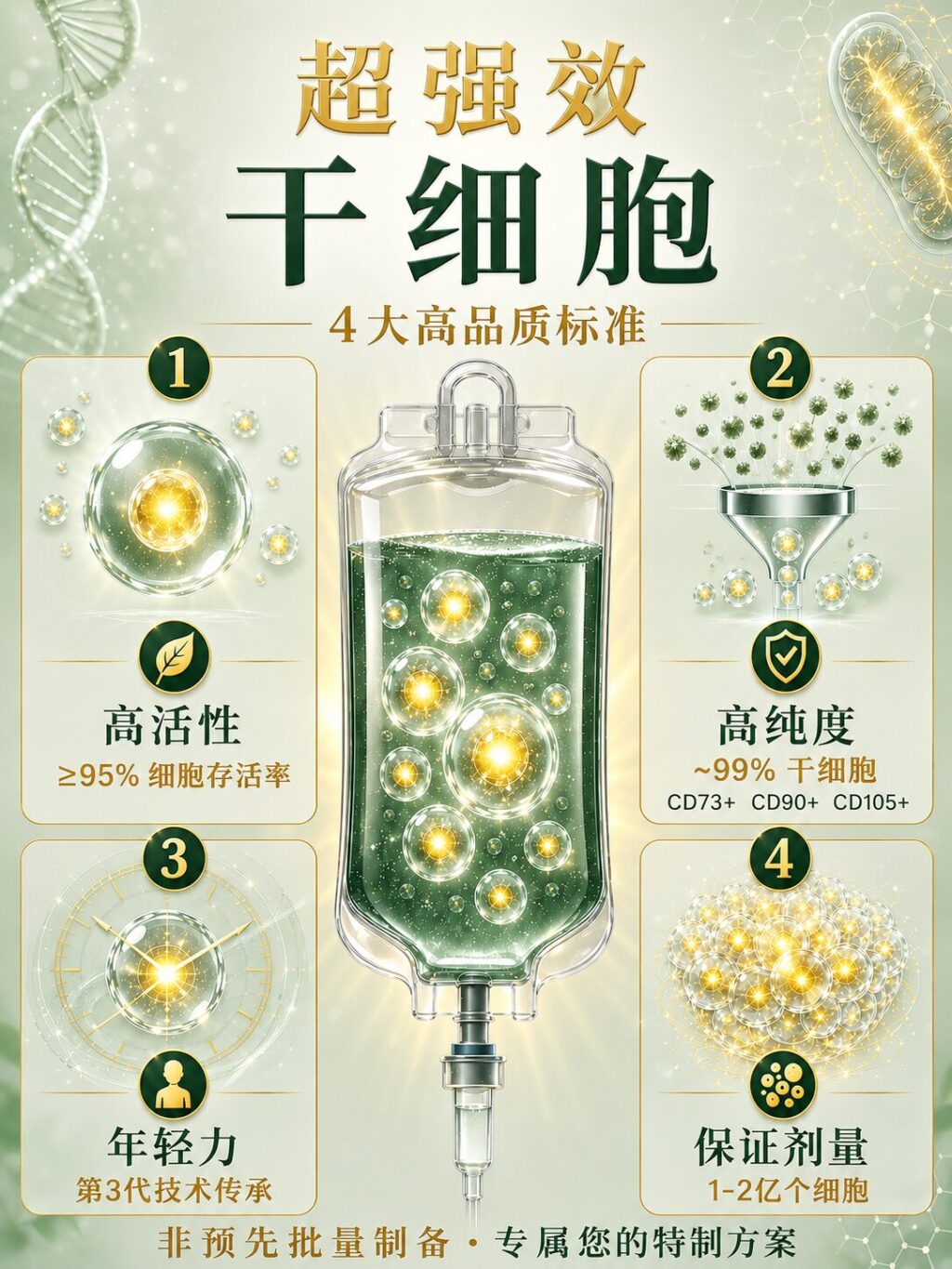
细胞在政府认证的细胞加工中心扩增约7周——特意维持这一培养时长,以达到每次最多2亿个细胞的治疗浓度。每一批细胞在给药前都验证存活率(≥95%)、通过多标志物表面抗原筛查验证纯度(CD73+、CD90+、CD105+;CD45−、CD34−),并确保低传代(P3)。低传代细胞保留完整再生能力;仓促压缩培养时间或使用高传代细胞的诊所,交付的是生物学上打了折扣的产品。
15项MHLW备案治疗计划
本院依据日本《再生医疗安全性确保法》持有15项已向厚生劳动省(MHLW)备案的再生医疗提供计划——包括糖尿病与糖尿病前期的专项二类计划(计划编号PB5250050)。这不是一张综合运营执照;每一项治疗计划都需要独立的政府委员会审查批准。
医师资质
医疗总监曾在美国国立卫生研究院(NIH)从事神经系统疾病研究,持有美国再生医学委员会(ABRM)认证医师资格——该领域首要的国际专科认证。已完成3,000多例干细胞治疗,涵盖骨关节炎、糖尿病、慢性疼痛、衰弱、勃起功能障碍、脱发和美容再生。研究成就包括与辉瑞公司合作、以第一作者发表全球首个人体PDE4B特异性PET示踪剂研究,并获《华尔街日报》报道。
面向国际患者的治疗方案
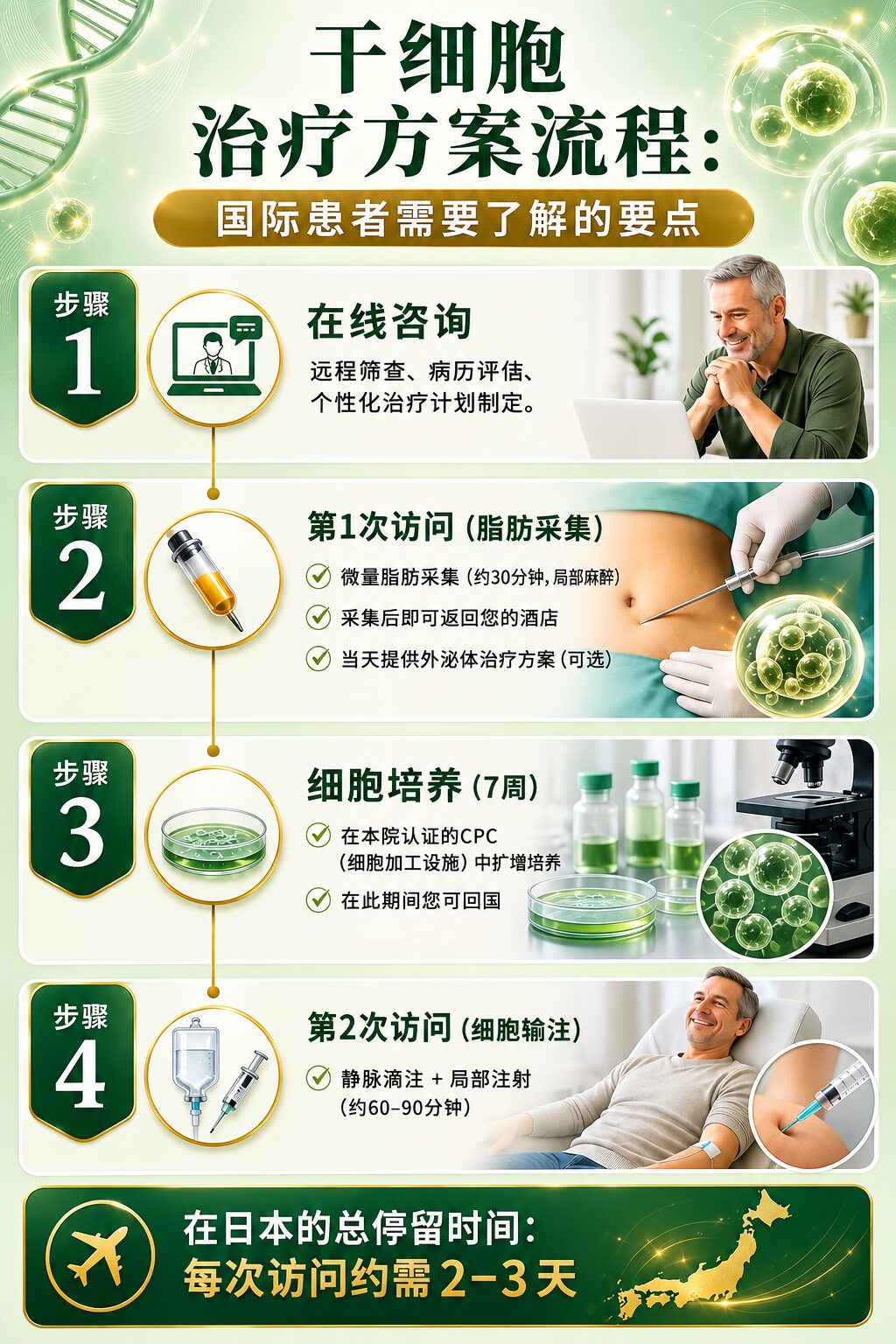
第1步——在线咨询:远程筛查、病历审阅、个性化治疗规划。
第2步——第一次到院(脂肪采集):微量脂肪采集(约30分钟,局部麻醉)。结束后即可返回酒店。
在采集脂肪的同一天,您还可以选择接受外泌体疗法。培养自体干细胞需要数周时间,而许多患者不愿在症状持续的情况下干等。外泌体——干细胞自然释放的微小信号信使——能在这段时间帮助平息炎症、缓解不适,让您在培养细胞就绪之前就开始感觉好转。可以把它看作一座桥梁:外泌体配合您的治疗时间线,而不是与之相悖。
第3步——细胞培养(7周):在本院认证CPC中扩增。此期间您可回国。
第4步——第二次到院(给药):静脉点滴±局部注射(60–90分钟)。
在日本的总停留时间:每次约2–3天。
创新的W注射 ~本院特色~
全身静脉点滴:60–90分钟内经静脉输注1–2亿个ADSC。这是1型和2型糖尿病的主要给药途径,将细胞输送到全身,应对胰腺功能、胰岛素抵抗和全身血管炎症。
局部注射:针对特定并发症的定制给药,例如糖尿病性勃起功能障碍——海绵体注射可在组织层面实现更高的局部细胞浓度。
组合方案:静脉点滴+局部注射,适合同时存在全身性疾病和特定并发症目标的患者。
无需药物的ED治疗:不靠药片和植入物的干细胞方案 了解更多 外泌体疗法:当天完成的无细胞再生治疗 了解更多可以期待什么:干细胞治疗效果时间线
1–3个月:血糖水平和神经病变症状初步改善
3–6个月:可测量的HbA1c下降和C肽上升
6个月后:效果持续,并可在医生监督下考虑减药。
直接联系我们——微信和邮件咨询免费。
常见问题
干细胞疗法能治愈我的糖尿病吗?
我们不使用”治愈”这个词。临床证据表明的是:许多患者达到临床缓解——血糖稳定到可以在医生监督下大幅减药或暂停用药的程度。改善程度取决于您的病程、剩余β细胞功能、胰岛素抵抗的严重程度、现有并发症和整体代谢健康。
自体干细胞疗法安全吗?
自体ADMSC疗法安全性记录优异。由于使用您自己的细胞,不存在免疫排斥风险。发表于Stem Cell Research & Therapy(2021)的一项覆盖15年的综合荟萃分析未发现与MSC疗法相关的死亡、感染等严重不良事件。日本的监管框架又增加了一层全球无双的安全保障。
我担心失明或截肢等并发症。干细胞疗法能帮上忙吗?
能。ADMSC疗法最重要的获益之一是血管新生——新血管的形成。通过恢复眼、肾、神经和四肢的微循环,干细胞疗法直接对抗导致这些毁灭性并发症的血管退化。这是任何口服药物都做不到的。
1型和2型糖尿病都治疗吗?
都治疗。对1型糖尿病,ADMSC遏制自身免疫破坏、保护剩余β细胞。对2型糖尿病,重点是逆转胰岛素抵抗、减轻全身炎症、再生β细胞功能。两种类型都能从并发症治疗中显著获益。
哪些人不适合干细胞疗法?
排除标准有限但重要:活动性感染、近期或现患癌症、严重器官衰竭、或无法坚持随访监测。大多数糖尿病患者(包括有并发症者)都是合适的候选者。具体适应性由咨询确定。
在哪里可以接受糖尿病干细胞治疗?
糖尿病干细胞治疗在多个国家可以获得,但监管质量差异巨大。日本是目前唯一拥有干细胞治疗专门国家立法的国家——《再生医疗安全性确保法》(2014年)——要求每项治疗都进行政府备案、认证细胞加工和持续安全监测。日本大阪的Cell Grand Clinic持有专门针对糖尿病与糖尿病前期的MHLW备案再生医疗提供计划(编号PB5250050)。提供糖尿病干细胞治疗的其他国家包括墨西哥、泰国、德国和巴拿马——但均无同等监管框架。评估诊所时的关键问题包括:治疗是否经政府备案?细胞加工设施是否通过GMP标准认证?医生是否持有再生医学专科认证?
糖尿病干细胞疗法的费用是多少?
糖尿病干细胞疗法的费用因国家、诊所和治疗方案而异。在日本,治疗受政府监管、使用认证细胞加工设施,价格反映了其中的质量控制和合规成本。在Cell Grand Clinic,治疗费用取决于给药细胞数量、给药方式(静脉点滴、局部注射或组合),以及是否包含针对并发症的专项治疗。建议直接联系我们,根据您的病史和治疗目标获取个性化报价——微信和邮件咨询免费。
干细胞疗法能逆转2型糖尿病吗?
临床证据提示,干细胞疗法可以部分逆转2型糖尿病底层的代谢功能障碍——特别是胰岛素抵抗和β细胞衰竭——但”逆转”一词需要审慎界定。2025年一项荟萃分析发现,干细胞(MSC)疗法改善血糖控制的频率总体约为安慰剂的2.8倍(比值比2.79),在2型糖尿病中效果更明显。机制包括恢复GLUT4葡萄糖转运蛋白、修复胰岛素信号通路(IRS-1/AKT)、抑制慢性炎症(NLRP3炎性小体)。许多患者在医生监督下实现显著的HbA1c下降和减药。但干细胞疗法不是有保证的治愈方法——结果取决于病程、剩余胰腺功能,以及治疗后的代谢管理依从性。
有”日本的糖尿病治愈方法”吗?
搜索”日本糖尿病治愈方法”的人,通常指的是日本的再生医疗路径——用干细胞修复疾病本身,而不仅仅是降血糖。日本并不宣传”治愈”。根据《再生医疗安全性确保法》(2014年),诊所提供政府备案的干细胞治疗,旨在再生β细胞、降低胰岛素抵抗、修复并发症。许多患者达到临床缓解——药物显著且持续地减少——但结果因人而异,干细胞疗法不是有保证的治愈方法。
掌握主动:从症状管理走向再生
您已经用药物管理糖尿病多年。账面上的数字也许还过得去。但如果对自己诚实,您知道疾病在进展、并发症在推进、药量在增加。
还有另一条路——它不会让您一夜之间停掉药物,但它提供了任何药片或注射都给不了的东西:修复损伤、恢复功能、并有机会减少对终身药物管理的依赖。
干细胞疗法不是要抛弃常规医学。它是为您的治疗增加一个再生的维度——致力于治愈底层疾病,而不仅仅是压制症状。这是糖尿病治疗的未来,而且今天就可以在全球最严格的监管之下获得。
在日本大阪的Cell Grand Clinic,我们为准备好从”管理”迈向”再生”的国际患者提供个性化干细胞治疗。
📍 日本大阪·心斋桥 | ✈️ 距关西国际机场(KIX)50分钟
🌐 提供微信中文咨询窗口 | 📋 MHLW计划编号PB5250050(糖尿病与糖尿病前期)
直接联系我们——微信和邮件咨询免费。
参考文献
- Li H, et al. A meta-analysis on application and prospect of cell therapy in the treatment of diabetes mellitus. Stem Cell Res Ther. 2025;16(1):249. PMID 40390031
- Zang L, et al. Umbilical cord-derived MSCs in Chinese adults with type 2 diabetes: double-blind, randomized, placebo-controlled phase II trial. Stem Cell Res Ther. 2022. PMID 35505375
- MSC-based therapy for type 1 & 2 diabetes: systematic review and meta-analysis of RCTs. Diabetol Metab Syndr. 2025. PMID 40462158
- Efficacy and safety of stem cell therapy in diabetes mellitus — systematic review and meta-analysis (20 RCTs). Syst Rev. 2025. PMID 41639868
- Hu J, et al. Long-term effects of Wharton’s jelly-derived MSCs for newly-onset type 1 diabetes (RCT, n=29). Endocr J. 2013. PMID 23154532
- Carlsson PO, et al. Umbilical cord–derived MSCs preserve endogenous insulin production in type 1 diabetes: Phase I/II RCT (ProTrans). Diabetologia. 2023. PMID 37221247
- Zimislecel (stem cell–derived islets) for type 1 diabetes. N Engl J Med. 2025. PMID 40544428
- NEPHSTROM: MSC therapy in diabetic kidney disease, randomized trial. J Am Soc Nephrol. 2023. PMID 37560967
- Elainein H, et al. ADSCs for diabetic foot ulcers: systematic review and meta-analysis. Diabetol Metab Syndr. 2025.
- Wang Y, Yi H, Song Y. The safety of MSC therapy over the past 15 years: a meta-analysis. Stem Cell Res Ther. 2021;12:545. PMID 34663461
- Reichman TW, et al. Stem Cell–Derived, Fully Differentiated Islets for Type 1 Diabetes. N Engl J Med. 2025;393(9):858-868. PMID: 40544428
- Wu J, et al. Treating a type 2 diabetic patient with impaired pancreatic islet function by personalized endoderm stem cell-derived islet tissue. Cell Discov. 2024;10(1):45. PMID: 38684699
免责声明:本文为教育性内容,不构成医疗建议。个体结果各异;结局取决于健康状况、疾病严重程度和剩余β细胞功能。Cell Grand Clinic依据日本《再生医疗安全性确保法》及所需政府许可运营。